


 Global








Should TVS protection be added to DC/DC and LDO?
In the electronics industry, many people have been struggling with whether to add TVS (transient suppression diode) to the input and output terminals of DC/DC and LDO?
Firstly, let's get to know what DC/DC and LDO are?
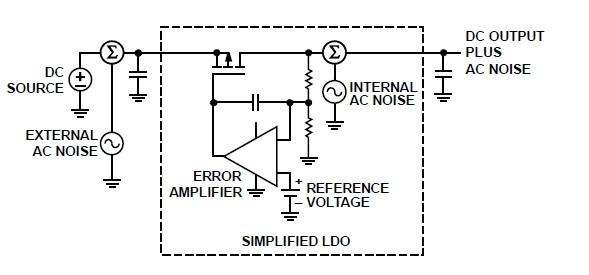
DC/DC refers to the general term for linear and switch mode voltage regulators, which can include boost and buck.
LDO stands for Low Dropout Regulator, which means Low Dropout Linear Regulator in Chinese
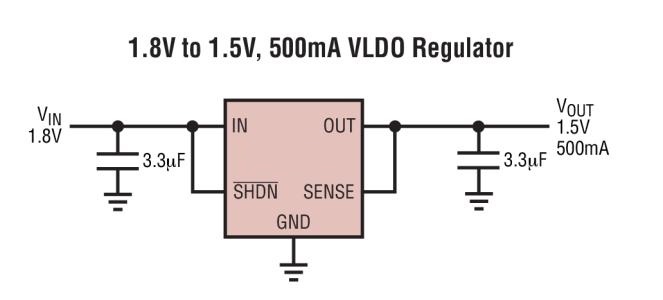
On the surface, the main difference is relative to traditional linear regulators. Traditional linear regulators, such as the 78xx series chips, require an input voltage that is 2v~3V higher than the output voltage, otherwise they cannot function properly, while LDOs only have a voltage difference of 0.8V from 3.3V to 2.5V. The principle is equivalent to a resistor voltage divider to achieve voltage reduction, with high energy loss. The reduced voltage is converted into heat, and the larger the voltage difference and load current of the voltage reduction, the more obvious the chip heating. The packaging of this type of chip is relatively large, making it easy to dissipate heat. And DC/DC buck chips: During the buck process, energy loss is relatively small, and the chip does not generate significant heat. The chip package is relatively small and can achieve PWM digital control.
The difference in EMC characteristics between the two: DC/DC: high efficiency, high noise; Low noise, low static current;
The EMC characteristics of LDO include low cost, low noise, and low static current of linear regulators, which are its major advantages. It also requires very few peripheral circuit components, usually only one or two bypass capacitors are needed. With the development of semiconductor technology in China, mainstream LDO linear regulators can achieve the following indicators: output noise of 28 μ V, PSRR of 62dB, static current of 1 μ A or lower, and voltage drop of only 100mV
The EMC characteristics of DC-DC are high conversion efficiency, high current capability, but significant output interference and relatively large size.
Generally, when the current is considered to be less than 2.5A, as the process becomes more stable, larger currents can be applied; If the difference between the input voltage and the output voltage is less than 2.5V, it is recommended to use LDO. This is the "Double 2.5 Theory" recognized by the Yinte R&D team. It also has high noise and ripple suppression, occupies a small PCB board area, and is suitable for handheld electronic products such as mobile phones; Inductors are not allowed in circuit power supplies, such as wristbands and wearable devices; The power supply needs to have instantaneous calibration and output status self-test functions; Require low voltage drop of the voltage regulator and low self power consumption; Require low-cost routes.
Secondly, let's talk about whether TVS or ESD should be added?
Reason 1: For LDOs with voltages below 5V, our suggestion is to add TVS or ESD; Because the quality in the LDO market varies greatly, many products with quality between critical values are easily affected by external interference;
Reason 2: Many brands claim to have a certain level of surge capability. After professional evaluation, it is true that some companies' products have good interference capabilities. However, due to limitations in product space and chip technology, most products are difficult to meet actual requirements. Nevertheless, these devices are mostly placed in the middle of the PCBA, and the design of noise reducing capacitors and filtering circuits is relatively sufficient!
Finally: How to add? Where to add it?
Our suggestion is generally to use the INPUT terminal, especially the Vin terminal of the power supply, which is beneficial for processing the voltage to a cleaner, more stable, and more power quality voltage. This is beneficial for integrated chips such as MCUs and microcontrollers, improving their product quality and enhancing their service life!
What model to add? For more designs, you can contact technical engineers!
Yin Te Electronics: 'smbj. smaj'
 Hot News


 沪公网安备31011702889749号

