


 Global









The fundamental principle of plasma formation involves heating a substance to a sufficiently high temperature to ionize it, thereby freeing electrons from atoms or molecules to form free electrons and positively charged ions. The main steps of plasma formation are as follows:
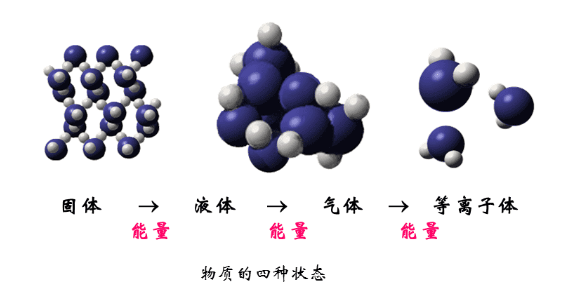
1. Heating: The substance is heated to a sufficiently high temperature. High temperatures can be provided by electrical discharge, high-energy light, thermal energy, etc.
2. Ionization: The high temperature provides sufficient energy to the atoms or molecules of the substance, triggering ionization. In this process, electrons bound to atoms or molecules are freed, forming free electrons and positively charged ions.
3. Electrical Neutrality: In plasma, collisions and interactions between electrons, ions, and neutral atoms maintain overall electrical neutrality.
4. Self-Sustainment and Structure: Plasma is self-sustaining, meaning electrons and ions move freely under the influence of an electric field without requiring external driving forces. After formation, plasma can take various structures, such as plasma clouds or plasma beams, which play important roles in plasma physics and applications.
Plasma exists both in nature and in laboratories, such as solar plasma, flame plasma, and discharge plasma. Due to its unique physical properties, plasma has broad applications in plasma physics, nuclear fusion research, semiconductor manufacturing, lighting, plasma processing, and plasma medicine.
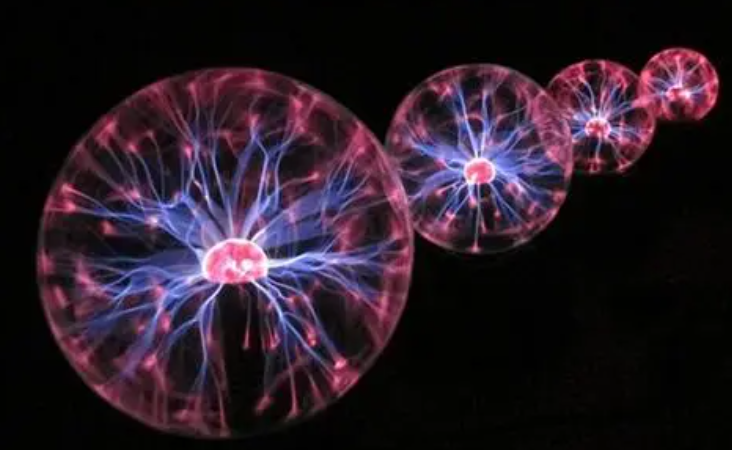
A high-density plasma cloud refers to a plasma region with high electron and ion densities. The main purposes of utilizing high-density plasma clouds include plasma physics research and applications, with typical uses such as:
1. Physics Research: High-density plasma clouds can be used to study the physical properties and behaviors of plasma, such as electron-ion interactions, particle heating and transport, and plasma oscillations. These studies are essential for understanding the fundamental principles of plasma physics and developing new plasma applications.
2. Plasma Processing: High-density plasma clouds can be used for plasma processing, such as plasma etching, plasma deposition, and plasma polymerization. Plasma processing is a common material processing technique that allows precise control at the micro- and nanoscale, used in the fabrication of microelectronic devices, optical devices, biochips, etc.
3. Fusion Research: High-density plasma clouds are important for nuclear fusion research. In nuclear fusion experiments, hydrogen plasma must be heated to high temperatures and maintained at high densities to achieve fusion reactions. High-density plasma clouds provide the conditions necessary for fusion reactions, forming the basis for research and development in nuclear fusion technology.
In summary, utilizing high-density plasma clouds enables experiments and applications in fields such as plasma physics research, plasma processing, and nuclear fusion research, advancing plasma science and technology.
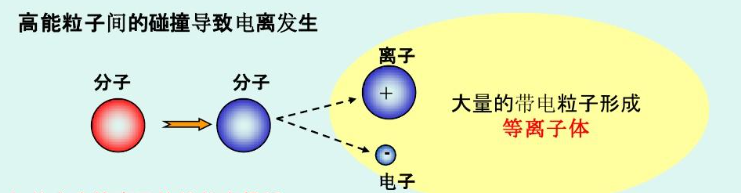
In tunnel blasting, a metal plasma cloud can create a potential difference. This occurs because the movement of large amounts of charge in the metal during explosions or high-current processes generates a potential difference.
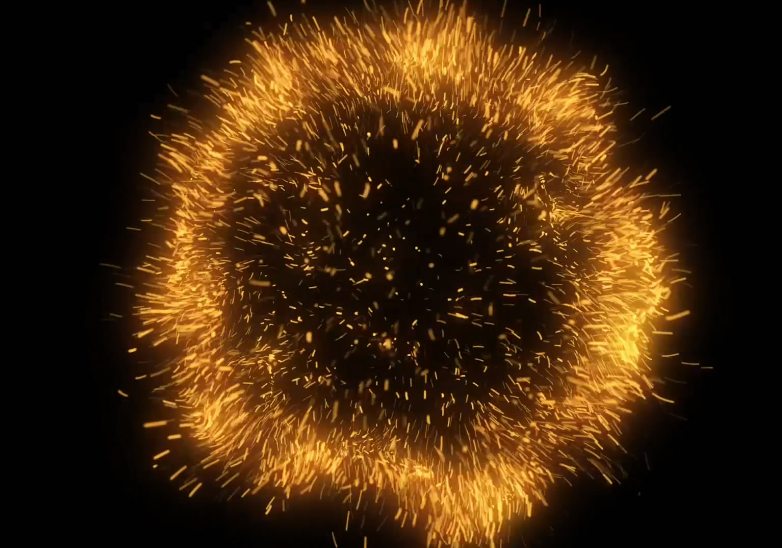
The potential difference can trigger arc discharge, produce sparks, and pose risks of fire and explosion. To address this issue, the following measures can be taken:
1. Grounding: By connecting the metal plasma cloud to the ground, charge can be dissipated to the ground, reducing the generation of potential differences. Grounding can be achieved by connecting conductive materials to grounding wires or using specially designed grounding devices.
2. Shielding and Isolation: Using insulating materials to shield and isolate the metal plasma cloud from other objects and the environment can reduce the propagation of potential differences and the risk of discharge.
3. Power Management: In tunnel blasting, properly managing power supply and current flow can also minimize potential differences. For example, controlling the magnitude and direction of the current ensures even charge distribution.
These measures help reduce the potential difference generated by metal plasma clouds, lowering the risk of sparks and arc discharge, and ensuring the safety of tunnel blasting operations. In practical applications, appropriate protective measures should be considered based on specific conditions.
 Hot News


 沪公网安备31011702889749号

