


 Global









The International Electrotechnical Commission (IEC) hopes that multi-purpose USB Type-C cables can reduce resource waste while bringing greater convenience to consumers. Nowadays, Type-C has been widely used and has high applicability and convenience, with many characteristics. Here are two examples:
Provided 2 CC lines, Power Delivery module (PD)
Two SBU lines, which transform into AUX_P/AUX_N differential lines in the DP protocol when the DP function is enabled.

The Yin Te Electronics Research Institute analyzed relevant data and found that with the rapid development of the digital and industrial markets; The standardization of Type-C interfaces in the market is becoming increasingly poor; There have been many instances of instability in the overall product, which are related to the quality and non standardization of Type-C;
In June 2019, the topic of solving PD problems was proposed, and after a year and a half, a significant breakthrough was finally achieved!
| D+/D- pair attenuation D+/D- attenuation |
≧-1.02dB@50MHz ≧-1.43dB@100MHz ≧-2.40dB@200MHz ≧-4.35dB@400MHz |
≧-1.02dB@50MHz ≧-1.43dB@100MHz ≧-2.40dB@200MHz ≧-4.35dB@400MHz |
EIA-364-101 |
| Coupling between VBus and differential USB D+/D- | ≦-40dBfor 0.3MHz| NA |
EIA-364-90 |
|
Our company's patent breakthrough solution this time is: PD's EMC problem solution and product concept!
Solution contact:
sales@yint.com.cn ; tech@yint.com.cn Or WeChat search official account: Yinte Electronics
Extended knowledge: Regarding the corresponding EMC protection strategies for USB Type-C, a brief description of the USB Type-C cable and connector specifications is first provided to elaborate on interface protection.
It defines a new socket with a thickness of 3mm and a cable with a thickness of 2.4mm and a reversible plug.
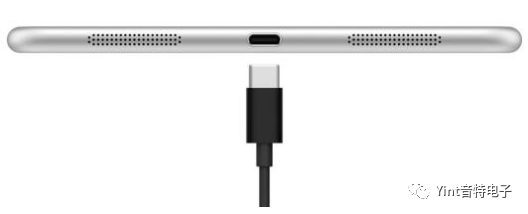
The USB Type-C specification requires electronic identification through cables to report their functionality to Type-C ports on hosts and devices. Electronic marking can be achieved by embedding the controller chip into the plug on one or both ends of the cable. The key requirements for this controller chip are low cost, small footprint, low power consumption, and must have a complete solution and flexible firmware update program.
| serial number | Traditional drawbacks | Advantages of Type-C |
| 1 |
The use of larger connectors violates the principles of small industrial design (socket height: A=4.5 mm; B = 10.4 mm) |
Small industrial design with a plug height of 2.4 mm |
| 2 | Require fixed plug and cable direction | Supports forward and reverse insertion of plugs and cables |
| 3 | Only transmit USB signals and VBUS (only 5V) | Can transmit USB signals and standby mode signals (such as PCIe or DisplayPort signals) on the same connector |
| 4 | The implementation of power supply is very complex and costly, and the power is limited to 7.5 W | Capable of achieving low-cost and up to 100 W power supply simultaneously |
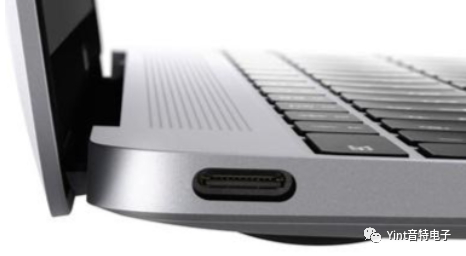
The socket signal transmits USB 3.1 (TX and RX pairs) and USB 2.0 (D+and D −) data buses, USB power supply (VBUS), ground (GND), configuration channel signals (CC1 and CC2), and two sideband use (SBU) signal pins. The two sets of USB data bus signal positions in this layout support USB signal mapping. This operation is completely independent of the direction of the plug in the socket.
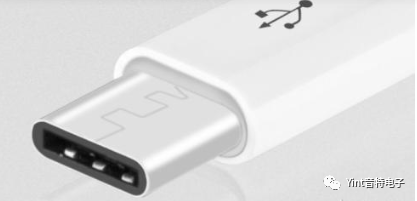
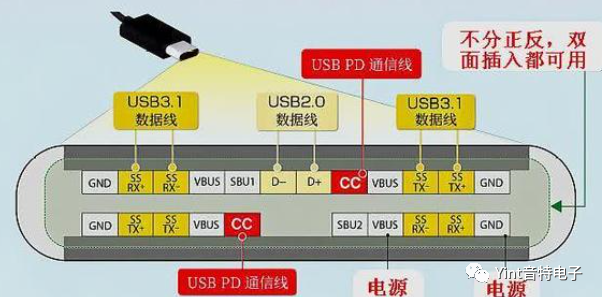
USB Type-C plug signal. Only one CC pin is connected through this cable to determine the signal direction; The other CC pin serves as VCONN, used to power electronic devices in USB Type-C plugs.
 Hot News


 沪公网安备31011702889749号

