


 Global









As automotive electronics continue evolving toward electrification, intelligence, and higher power density, accurate and stable temperature acquisition has become increasingly important in systems such as battery management systems, on-board chargers, DC-DC converters, motor drives, HVAC systems, and various automotive sensor modules.
Modern automotive environments contain substantial electrical noise generated by high-frequency switching devices, inverter systems, relay operation, long cable harnesses, and PWM motor control circuits. These conditions can directly affect analog temperature acquisition, often resulting in ADC fluctuation, unstable sampling, reduced signal integrity, and increased EMC validation complexity.
To address these challenges, YINT developed the MF52A-302J-3950-R1102-C104 Integrated NTC Temperature Sensing Module, a compact automotive-oriented temperature acquisition solution integrating NTC sensing and RC filtering into a single module structure.
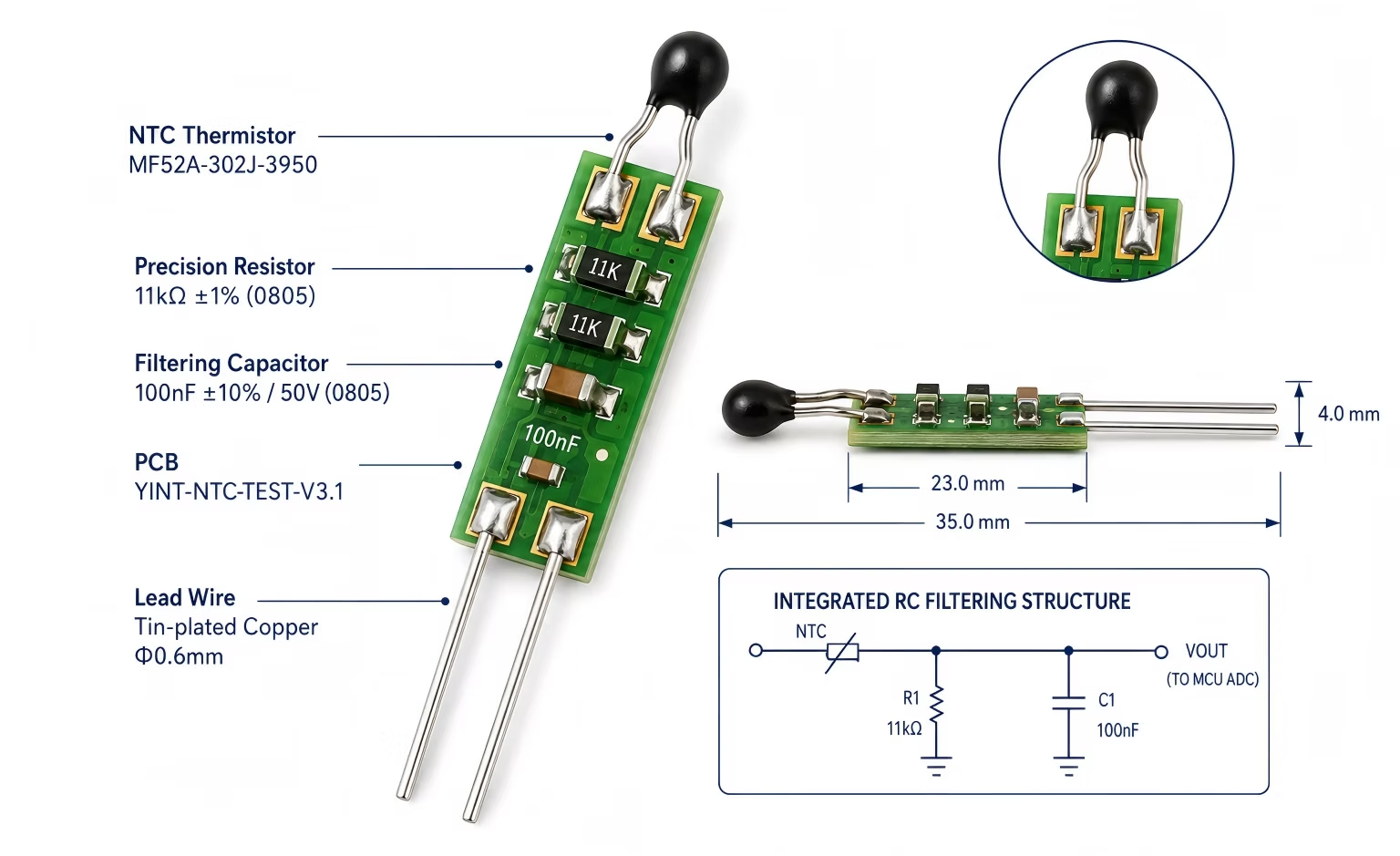
Figure 1. Integrated NTC temperature sensing module designed for automotive thermal monitoring systems.
Unlike conventional bare thermistors that require additional external signal conditioning networks, the integrated module helps improve analog signal stability while simplifying hardware integration and reducing overall EMC optimization workload.
The module integrates an MF52A-302J-3950 epoxy-encapsulated NTC thermistor together with an 11kΩ ±1% precision sampling resistor and a 100nF ±10% filtering capacitor within a dedicated PCB structure.
This integrated RC architecture is optimized to reduce conducted noise sensitivity and improve ADC signal consistency in electrically noisy automotive environments.
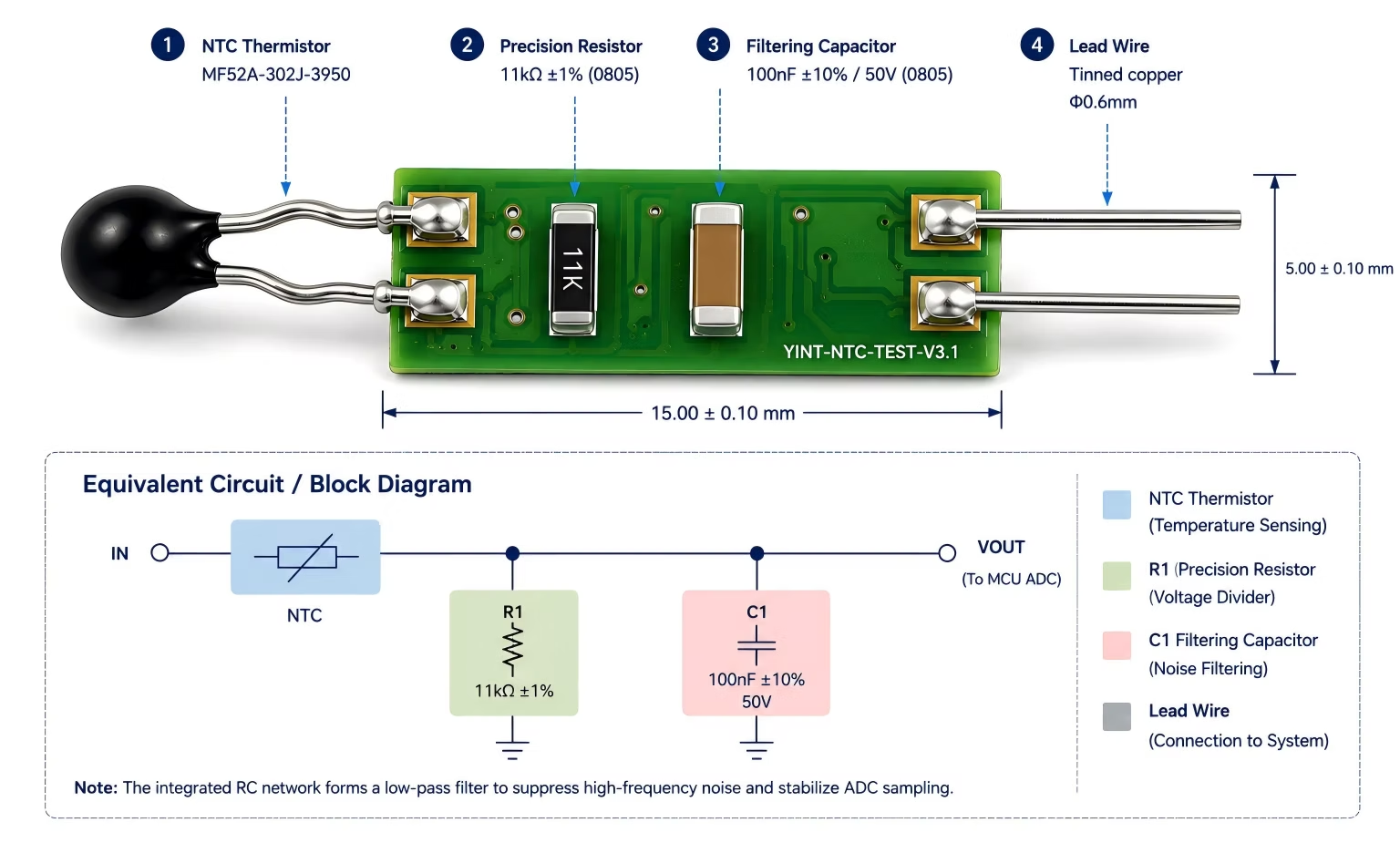
Figure 2. Internal module architecture integrating temperature sensing and RC signal filtering.
In modern automotive electronic systems, accurate thermal monitoring is essential for functions such as thermal compensation, battery protection, fan control, inverter derating, and motor thermal management.
However, conventional bare thermistors are often susceptible to common-mode interference and conducted EMI introduced by high-current switching and long wiring harnesses.
Additional external filtering circuits are typically required to stabilize the sensing signal, increasing PCB complexity and extending system validation cycles.
By integrating optimized RC filtering directly into the sensing module, the MF52A-302J-3950-R1102-C104 helps improve analog waveform stability, suppress high-frequency interference, and enhance overall signal integrity before the signal reaches the MCU ADC input stage.
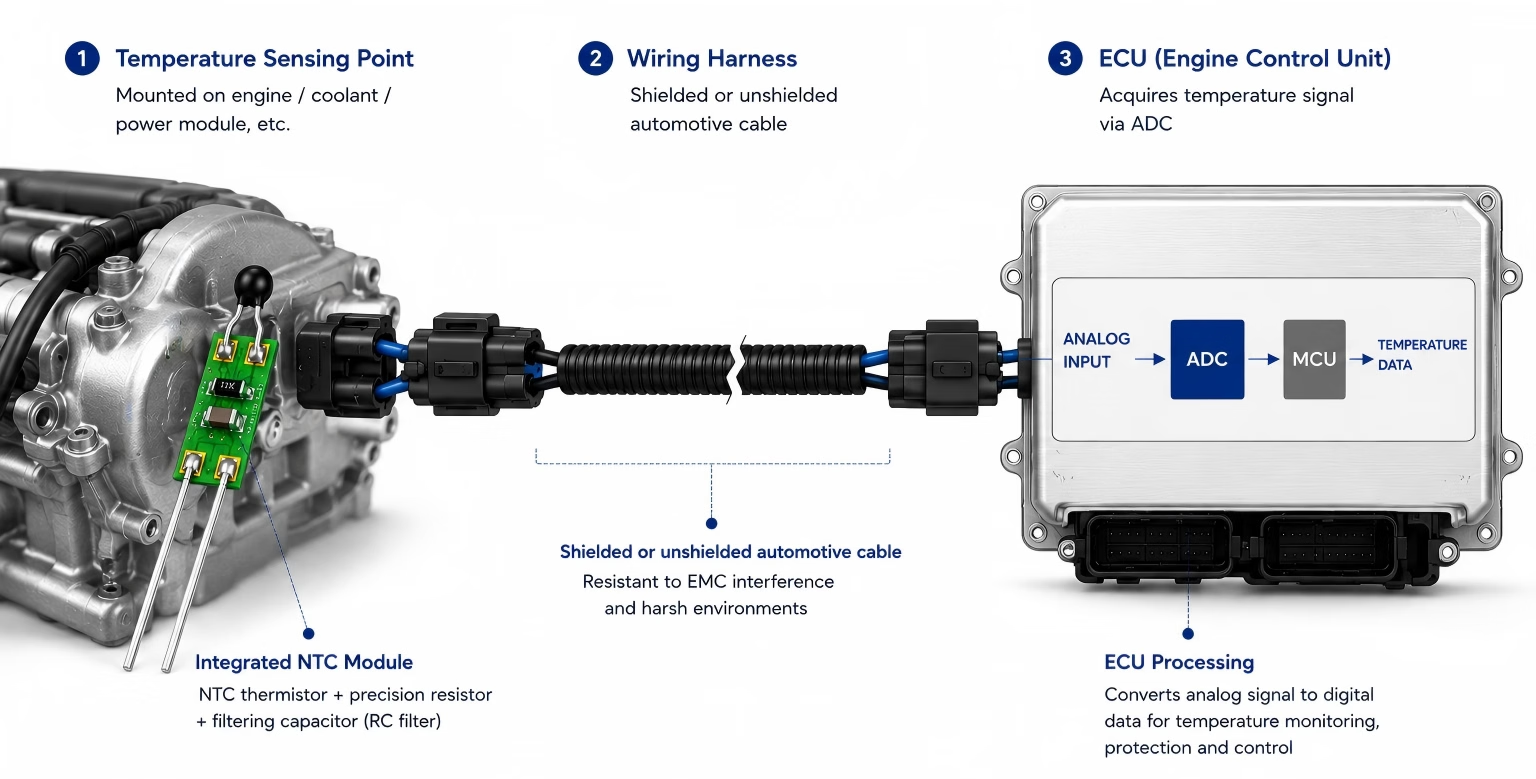
Figure 3. Typical automotive temperature acquisition architecture using integrated RC filtering.
The module is designed for stable operation across demanding automotive environments.
| Parameter | Value |
| Resistance @25°C | 3kΩ ±5% |
| Resistance @50°C | 1.076kΩ |
| B Value | 3950K ±1% |
| Dissipation Coefficient | ≥3mW/°C |
| Response Time (Liquid) | ≤12s |
| Insulation Resistance | ≥50MΩ |
| Operating Temperature Range | -55°C to +125°C |
The wide operating temperature range makes the module suitable for both cabin electronics and harsh under-hood automotive applications.
| Standard NTC | Our Module |
| Temperature sensing only | Integrated filtering + stable signal sampling |
| Poor EMC immunity | Better suited for automotive environments |
| Customers need to design external circuits themselves | Plug-and-play solution |
| ADC signal fluctuation | More stable output |
| Long development cycle | Helps shorten development time |
One of the most common challenges in automotive thermal acquisition systems is unstable ADC sampling caused by electrical interference.
Without proper signal conditioning, temperature sensing lines may experience analog waveform fluctuation, unstable MCU readings, thermal compensation errors, and inaccurate protection triggering.
The integrated RC filtering architecture helps stabilize the analog temperature signal before it reaches the ADC input stage.
Compared with conventional bare NTC thermistors, the integrated module architecture provides significant system-level advantages. Traditional thermistor solutions typically require external RC filtering design, EMC optimization, and repeated ADC tuning during development.
The integrated module simplifies system integration by reducing external component count and improving analog signal stability in noisy switching environments.
The module is particularly suitable for electric vehicle systems including BMS platforms, on-board chargers, DC-DC converters, inverter thermal monitoring systems, and motor controllers.
It is also widely applicable in coolant temperature sensing, oil temperature sensing, HVAC systems, industrial power supplies, energy storage systems, and other analog thermal monitoring applications requiring stable and reliable signal acquisition.
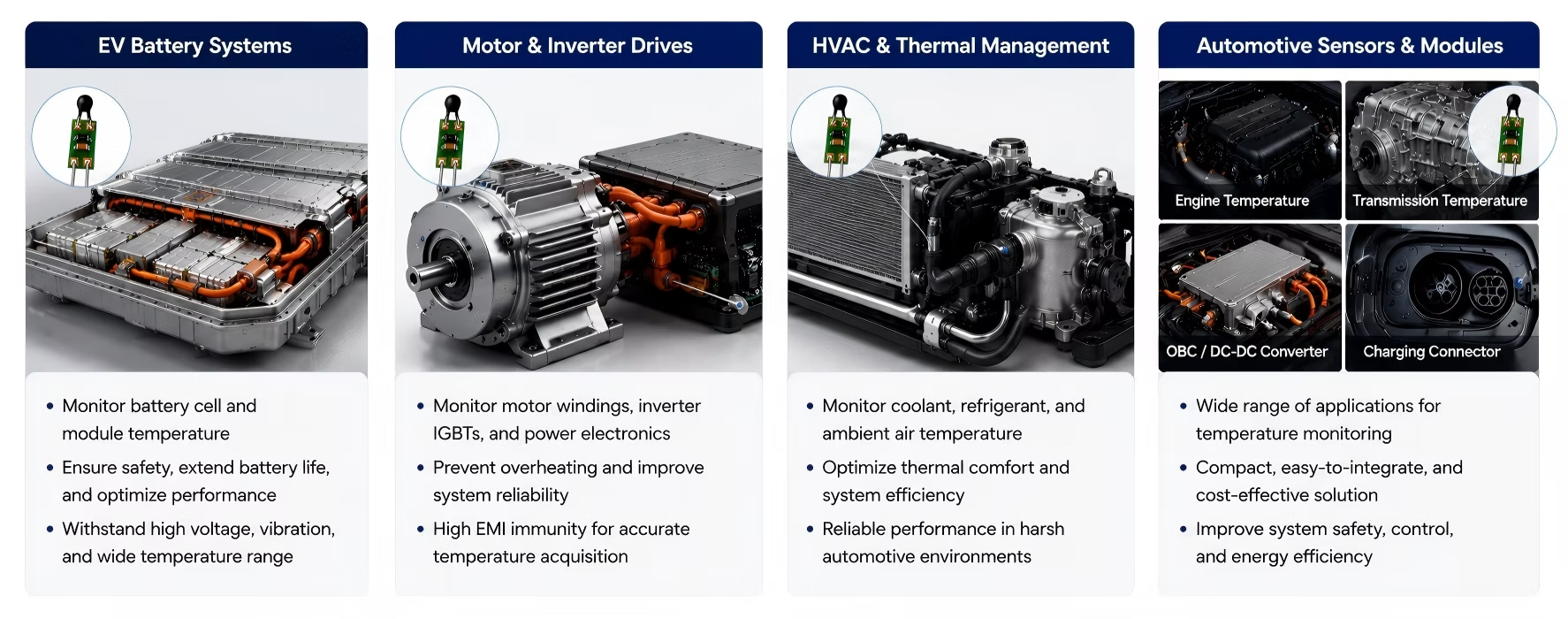
Figure 4. Typical applications for automotive and industrial thermal monitoring systems.
The MF52A-302J-3950-R1102-C104 is not simply a conventional thermistor component, but a compact temperature acquisition solution optimized for modern automotive electronic systems.
By integrating temperature sensing, signal conditioning, and RC filtering into a compact structure, the module helps improve ADC sampling stability, EMC robustness, and overall system reliability in harsh automotive and industrial operating environments.
As automotive electronic systems continue moving toward higher integration and intelligence, stable and reliable temperature acquisition is becoming an increasingly important part of overall system reliability and functional safety.
For detailed technical specifications, application support, samples, or customized automotive thermal sensing solutions, please contact the YINT engineering and sales team.
Website: www.yint-electronic.com Email: global@yint.com.cn
 Hot News


 沪公网安备31011702889749号

