


 Global









It should be acknowledged that China's capabilities in the chip manufacturing sector are continuously improving, particularly in the aerospace field, where domestically produced chips are being used in satellites, reducing reliance on foreign chips. Moreover, after the ZTE incident, sustained efforts by Chinese high-tech enterprises in the chip sector have brought notable changes to the microchip market. It is no wonder that Russian media have commented that China's development in microchips may shake the long-standing dominance of the United States in this field.
However, we still believe that despite advancements in chip design in recent years, the biggest obstacles lie in the lack of core technologies in high-end areas and a shortage of talent in related fields. Therefore, China's chip manufacturing level still lags significantly behind advanced international standards—a gap that can even be described as a "generational difference."
First, in the chip sector, China's strongest competitors are South Korea and the United States, while Chinese chips still hold limited influence in the global market. According to data released by Gartner, among the top ten semiconductor companies by revenue in 2017, none were Chinese, while five were American, solidifying the U.S. position as the dominant force in chips. South Korea's Samsung ranked first, with revenue reaching $68.825 billion in 2017 and a market share of 16.4%.
Second, China's chip industry started relatively late, leaving many gaps in core technologies that need to be filled. The late start of China's chip industry has resulted in significant technological disadvantages. Domestically produced chips tend to be relatively crude, with inconsistent quality and a lack of unified standards, making large-scale production challenging. Among the 16 key integrated circuit technologies, domestic chips hold a 0% share in nine of them.

Third, China's chip industry remains highly dependent on foreign technology, and there is still a long way to go before achieving independent design and production. According to official data, nearly 90% of China's chips rely on imports, amounting to as much as $260.1 billion in 2017 alone. This far exceeds the scale of petroleum imports, making chips the largest import category in China. The trade deficit also remains high, reaching a peak of $193.2 billion in 2017 in recent years.
Some may argue that Huawei can independently design top-tier Kirin chips. However, Kirin chips still rely on Taiwan's TSMC for manufacturing. Currently, TSMC has invested in setting up factories in mainland China, but Taiwanese authorities require that the technology used in TSMC's mainland factories must lag three generations behind those in Taiwan. Moreover, the core technologies of Kirin chips are not entirely designed by Huawei; it can only be said that the chips have a higher degree of localization.
Therefore, although many people in China advocate for self-reliance in chips and urge a rapid reduction in dependence on foreign chip technologies, this process must be gradual. After all, the chip technologies of the United States and South Korea have reached their current level through decades of development, massive financial investments, and generations of efforts to achieve their dominant positions in the chip industry.
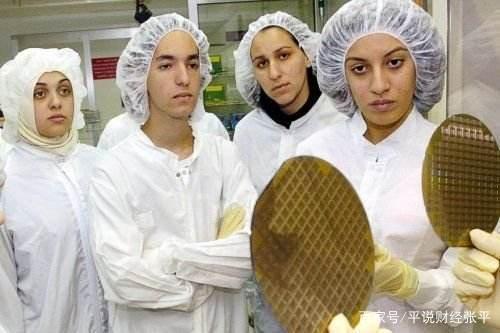
Of course, for China's chip industry to rise and narrow the generational gap with developed countries, a multi-pronged approach is essential. First, national policy support is indispensable for the chip industry's growth. This includes offering tax incentives and subsidies to chip design and manufacturing sectors and rewarding enterprises that achieve cutting-edge advancements in chip technology. Second, technology companies should strive for self-reliance, accelerate breakthroughs in frontier technologies and weak areas, and swiftly capture technological high ground to reduce reliance on imported chips.
Additionally, encouraging overseas scholars to return to China can drive continuous breakthroughs in chip technology. As early as the founding of the People's Republic of China, many veteran experts returned to the motherland with patents and technologies, driven by patriotism. Today, it is necessary to call on overseas students to bring core high-end chip technologies back to China. With such efforts, it is possible for China's chip industry to achieve a "corner overtaking" in the coming years.
 Hot News


 沪公网安备31011702889749号

