


 Global









According to reports from mainstream domestic media, in the 2018 Government Work Report, the chip (integrated circuit/semiconductor) industry was ranked as the top priority in China's real economy by the national government. At the same time, local governments have also positioned the chip industry as a strategic pillar industry for regional development.
In accordance with the plans and goals set by the state: by 2020, the gap between China's chip industry and international advanced levels is to be further narrowed, with the industry's annual sales growth rate striving to exceed 20%. Then, by 2030, domestic companies in the main segments of China's chip industry chain are expected to reach international advanced levels, with a number of domestic enterprises entering the global first tier.
Clearly, the development of the domestic chip industry has been designated as a key national research and engineering priority. This is mainly due to two factors: On one hand, the chip industry represents the cutting edge of high-end manufacturing, and there is currently a generational gap between China and Western countries in this field. If China can make a breakthrough in the chip industry, Chinese manufacturing will comprehensively upgrade from low to high-end.
On the other hand, the ZTE incident illustrates China's need to reduce its excessive reliance on imported chips. The current significant trade deficit should be transformed into a surplus to generate national profits. Approximately half of the global chip production capacity is supplied to China. In 2017 alone, China's chip imports further increased to $260.1 billion, while chip exports remained below $67 billion.
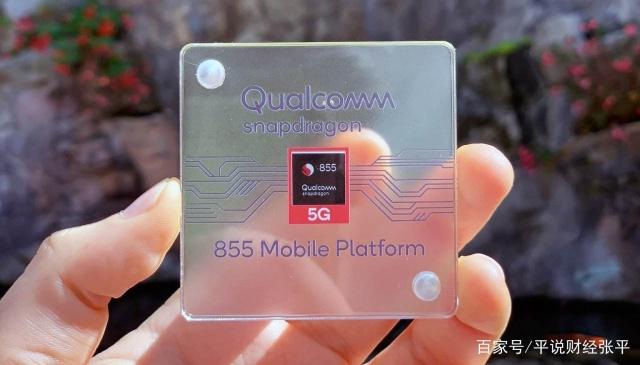
In fact, the chip industry essentially consists of several major segments: key equipment and materials, design, manufacturing, packaging, and testing. In chip design, Huawei's HiSilicon has developed high-end Kirin chips and baseband chips. In packaging and testing, Advanced Micro-Fabrication Equipment Inc. (AMEC) has developed internationally competitive 7nm etching machines. Therefore, in many areas of the chip industry, China does not lag as far behind foreign counterparts as rumored. However, in the mass manufacturing of chips, there remains a significant generational gap compared to internationally leading technologies.
Some may ask, where exactly lies the difficulty in developing China's chip industry? Firstly, in the past, we imported whatever was needed, without the necessity of investing heavily in independent R&D and production. After the ZTE incident, we began striving to catch up, but gaps remain, especially in design and manufacturing. Western countries now hold core chip technologies and are unwilling to sell them to China or allow Chinese acquisitions of related overseas enterprises.
Moreover, China is still in the initial stages of investment and talent acquisition in the chip industry. Few domestic companies, like Huawei, invest heavily in chip R&D annually and prioritize equity incentives for R&D personnel. Similarly, chip manufacturer TSMC offers R&D staff salaries six times higher than those at SMIC.
Therefore, the state is now incentivizing technology enterprises that invest in chip industry R&D and encouraging them to seek financing through listings. It also encourages overseas students in chip-related fields to return and start businesses, given that half of global chip demand comes from the Chinese market. Additionally, efforts should be made to address international misunderstandings about China's chip technology development and foster academic exchanges with institutions in related fields worldwide.
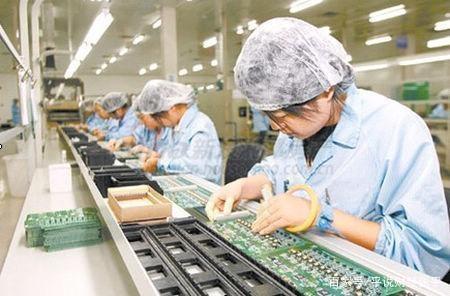
Finally, Chinese tech companies like Huawei face challenges in mass-producing chips, while international chip manufacturers such as Samsung and TSMC would incur losses relying solely on regional or internal demand. These manufacturers sustain profitability by receiving large-scale chip manufacturing orders from Europe and the U.S., allowing them to spread costs and achieve economies of scale. In China, Huawei only manufactures chips for its own phones, and given its limited phone sales volume, venturing into chip manufacturing alone might not even cover costs—unless supported by a nationwide concerted effort.
Where do the challenges in China's chip industry development lie? They lie in the early start and substantial investments of others, which have undoubtedly created a gap in chip manufacturing; in the relatively low investment and limited talent attraction advantages of Chinese chip enterprises; and in the inability to achieve the large-scale, profitable mass production capabilities of companies like Samsung and TSMC. However, it is believed that Chinese chip enterprises will eventually catch up and achieve major breakthroughs in this field within three years. Let us wait and see.
 Hot News


 沪公网安备31011702889749号

