


 Global









This revision command includes the following 13 types of wireless network devices: 1. Handheld mobile phones on mobile phones; 2. Tablet tablets; 3. Digital cameras; 4. Headphones; 5. Headphones with microphone; 6. Handheld video game consoles; 7. Portable speakers; 8. E-readers, an e-book reader; 9. Computer keyboard keyboards;
10. Computer Mouse Mice; 11. Portable navigation systems; 12. In ear Earbuds; 13. Laptops
According to the new command regulations, all 13 types of machinery and equipment must be equipped with USB Type-C charging sockets that comply with the EN IEC 62680-1-3:2021 standard, and can be charged using battery charging cables that comply with the same standard. Machines suitable for fast charging should use USB PD protocols that comply with EN IEC 62680-1-2:2021. It is stipulated that these devices should have universal charging sockets to reduce compatibility issues between different brands and models. The requirements for energy efficiency, performance, and environment of chargers have been established to promote sustainable development and reduce resource waste. It is stipulated that equipment manufacturers need to submit compliance certificates to the European Commission in order to sell in the EU market. Overall, the purpose of the EU2022/2380 command is to promote the universality and sustainability of wireless device charging, reduce waste, and protect the environment。
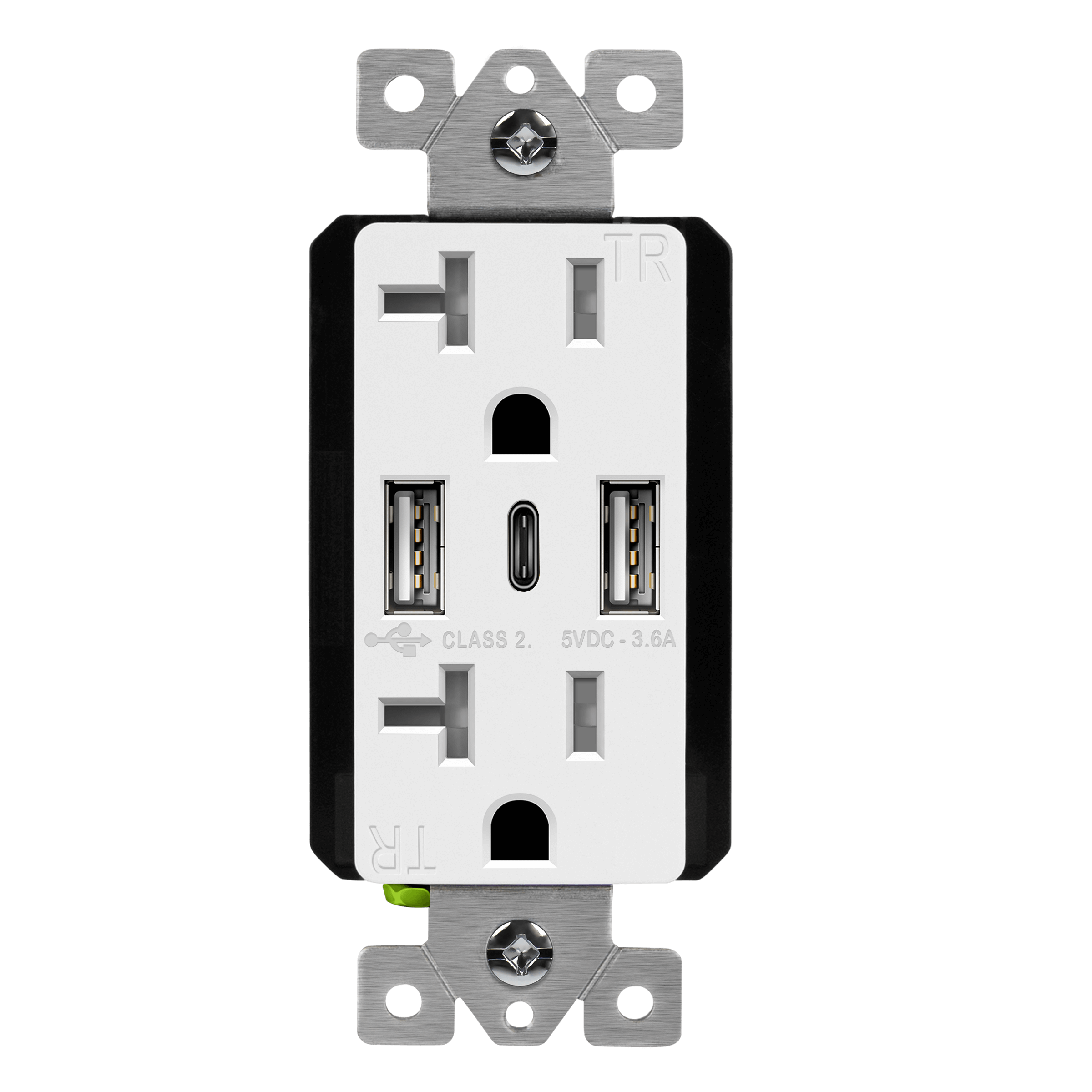
Revised Article 3.3 (a) of the original directive and added Article 3.4, supplementing specific implementation requirements for the universal charging interface.
Updated the responsibilities and obligations of economic operators such as manufacturers, importers, distributors, etc
The 13 types of products mentioned above are required to be equipped with USB Type-C that complies with the EN IEC 62680-1-3:2021 standard, as long as they can be charged through cables ® The charging interface should be able to use charging cables that meet the same standards for charging, and devices that support fast charging should comply with the USB PD (Power Delivery) protocol of EN IEC 62680-1-2:2021 standard.
The other categories mentioned above, except for laptops, will be mandatory in EU member states from December 28, 2024. The requirements for laptops will be mandatory from April 28, 2026. EN / IEC 62680-1-3:2021 “Universal serial bus interfaces for data and power – Part 1-3: Common components – USB Type-C Cable and Connector Specification。
The instructions specify the standards that must be followed when using USB-C as the charging interface technology (Table 1):
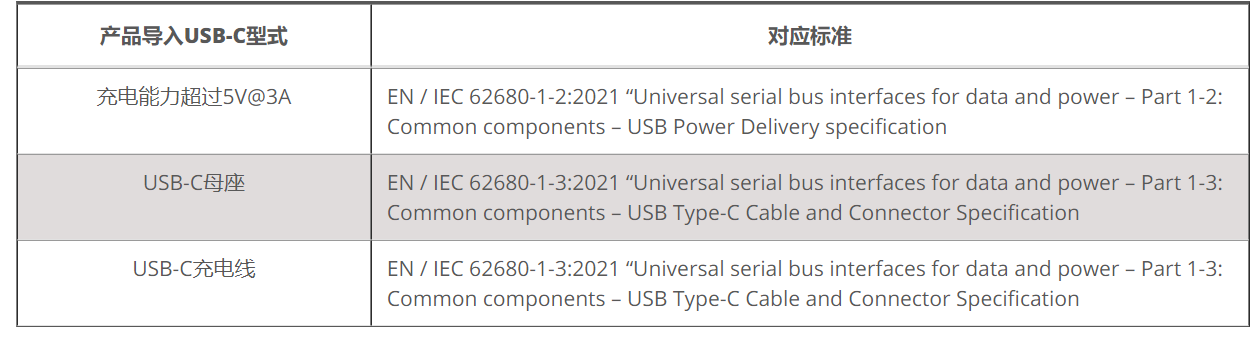
Generally speaking, USB-C supports 5V@3A Charging capability; When the device is able to provide more than 5V@3A When using a 15W wired charging method, the charging protocol must also meet the requirements of EN/IEC 62680-1-2:2021 Part 1-2, which fully supports USB Power Delivery.
In order to ensure that consumers and other end users receive necessary information about charging characteristics when purchasing products, the directive requires that the product must indicate whether a charging device is attached (Table 2) and, if so, its charging capacity (Figure 1).
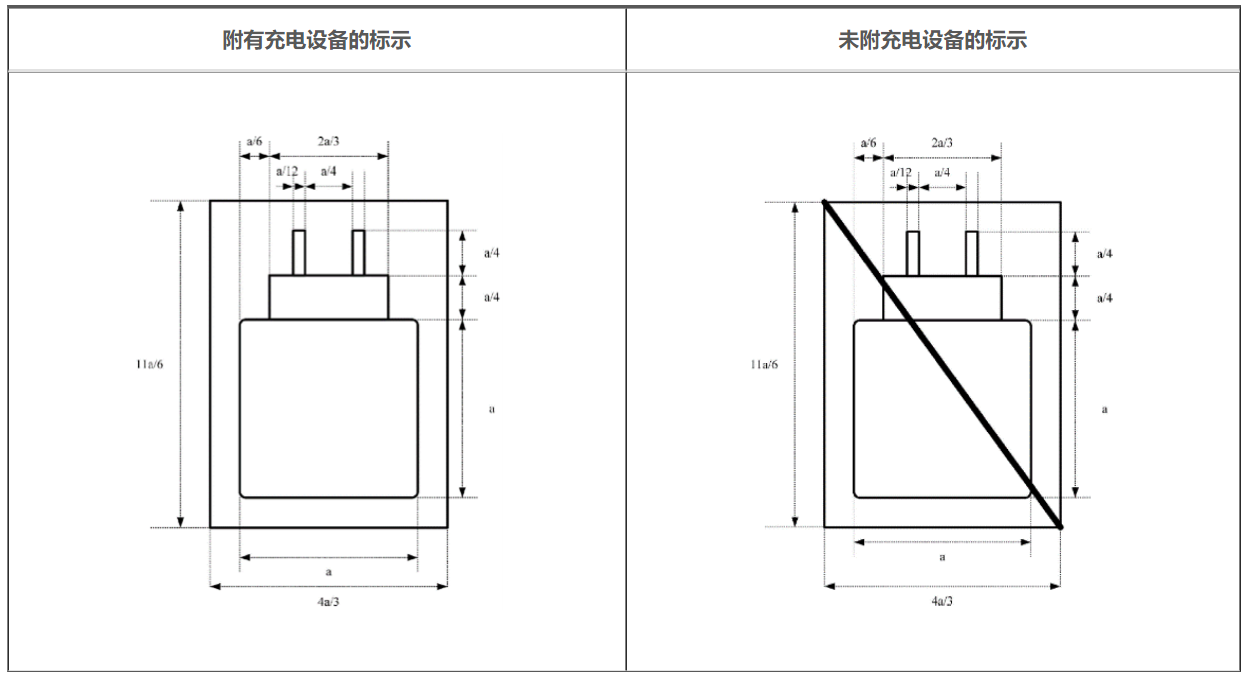
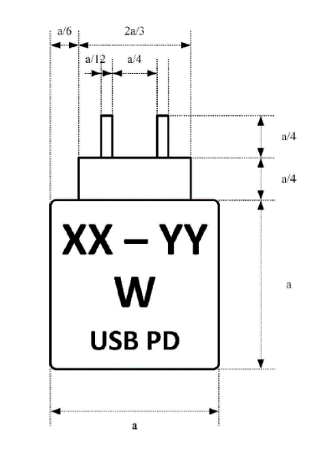
In the above figure, XX represents the minimum charging power supported by the charging device, YY represents the maximum charging power supported by the charging device, W represents the power unit in watts, and PD is USB Power Delivery. If the charging device supports Power Delivery, the word PD must be indicated. If the design and labeling of the product do not comply with the requirements of this directive, the EU will impose corresponding penalties and prohibitions.
USB interface is widely used in various calculator interface devices, tablet computers, mobile phones, as well as in the LED lighting and fan industries and many other related applications. USB Type-C, as the latest type of USB interface, has been accepted as one of the global connectivity standards and can support the transmission of up to 240 W power supply voltage and high-throughput digital content.
In view of this, the International Electrotechnical Commission (IEC) adopted the USB-IF specification and published the IEC 62680 series of standards after 2016 to make the USB Type-C interface and related technologies easier to adopt globally.
 Hot News


 沪公网安备31011702889749号

