


 Global









At the forefront of human-machine interaction in intelligent cockpits, the touch steering wheel (SWC) is becoming a key component in enhancing the driving experience. However, as a high-frequency contact interface for the driver, the electromagnetic compatibility challenges it faces, especially the threat of electrostatic discharge (ESD), are far more complex than those of traditional steering wheels. According to mandatory standards such as GB34660-2017, SWCs must withstand stringent transient pulse tests, for example, the ±4kV HBM and ±8kV CDM discharges defined by the IEC61000-4-2 standard. This is not only related to functional safety but also directly affects the vehicle's reliability rating.
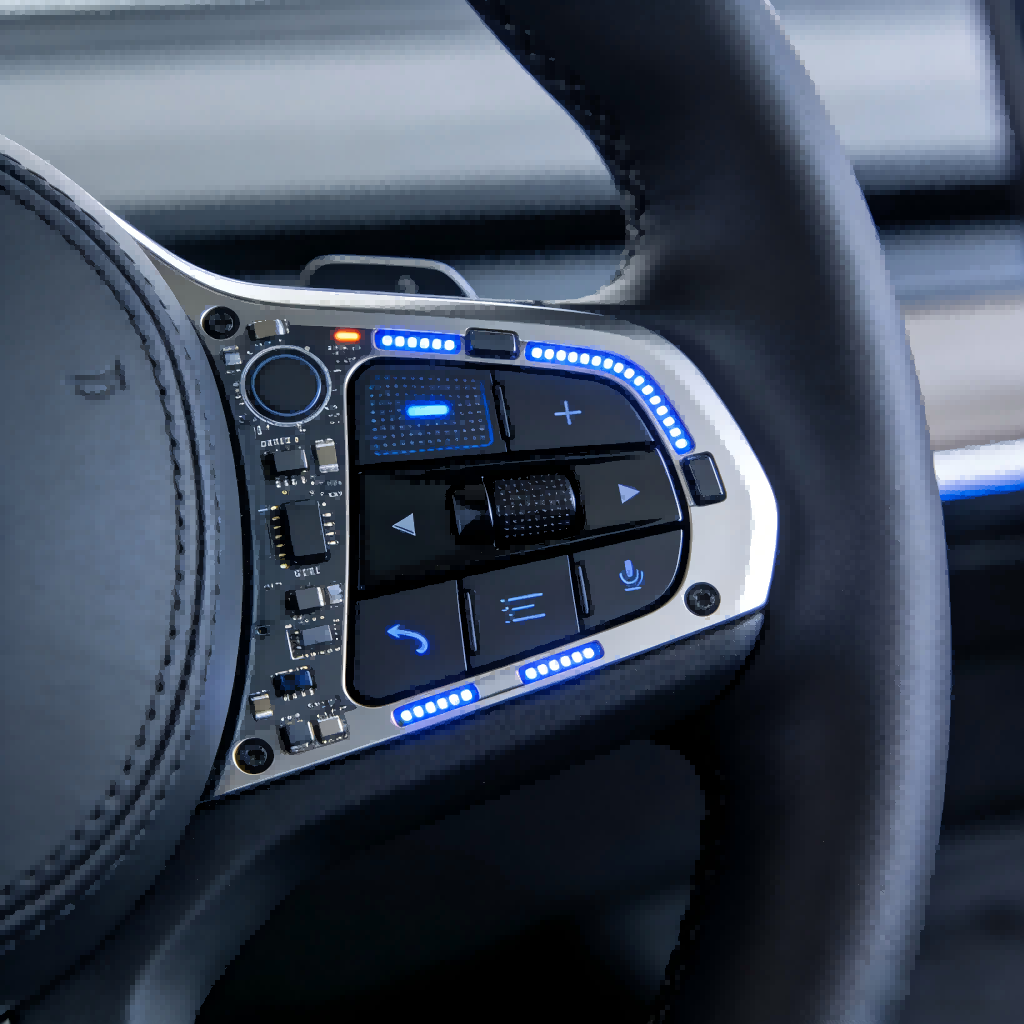
First: Why are General-Purpose TVS Diodes Inadequate for Protecting Touch Signal Lines?
The SWC integrates a touch control chip, capacitive sensing array, and microcontroller. Its signal lines are extremely sensitive to capacitive loads. Although traditional ESD protection devices can clamp voltage, their relatively high parasitic capacitance (typically ranging from a few pF to tens of pF) can severely degrade the integrity of high-speed touch signals, leading to reduced sensitivity or false triggering. Furthermore, noise on the vehicle's power supply network (such as load dump and ignition pulses) can couple into sensitive 3.3V/5V control circuits via the power supply lines. Protection solely at the power supply end is insufficient. Therefore, a coordinated protection scheme targeting both signal and power paths is fundamental to achieving stable SWC operation.
Second: Customizing a "Low Capacitance Shield" for the Touch Interface
Addressing the stringent low-capacitance requirements of touch signal lines, Yinte Electronics provides ESD protection solutions specifically designed for high-sensitivity interfaces. For instance, devices in the selection library suitable for LVDS signal protection, such as the ESDULC5V0D9B and ESDLLC5V0D8BH, feature extremely low typical parasitic capacitance. They provide robust protection capability while causing almost no attenuation to high-speed signals. These devices utilize ultra-small packages, making them ideal for the space-constrained PCB layouts inside SWCs. They can be placed directly near connector pins or the touch IC pins, providing precise "close-proximity protection" for each data line or sensing line.
Third: Building a Complete EMI/EMS Defense Line from Power Supply to Interface
Single-point ESD protection is only half the solution. To meet the electrical load requirements of ISO16750-2/4, systematic protection for the entire power supply chain of the SWC module is essential. Starting from the vehicle's 12V/24V power input, protection against surges and burst pulses is required. Senior engineers recommend using common-mode inductors like the CMZ1211-501T to suppress common-mode noise on power lines, while pairing them with automotive-grade TVS diodes such as the SM8K24CA or 5.0SMDJ24CA to provide reliable surge protection for the power input. For the 3.3V/5V low-voltage power rails generated after DC-DC conversion, designated devices from the selection library like the ESDLC3V3D3B can be selected for secondary clamping, ensuring the purity and safety of the core chip's power supply.
Fourth: Selection Recommendations
A Reliable Combination Based on AEC-Q200
For core safety components such as intelligent steering wheel controllers, the long-term reliability of all electronic components is paramount. The protection devices recommended above by Yint Electronics all comply with the AEC-Q200 automotive-grade certification and can withstand harsh operating temperature cycles from -40°C to +125°C. In practical design, the following combination is recommended:
1. Power Input Terminal
Common-mode inductor CMZ1211-501T + Transient Voltage Suppression Diode SM8K24CA, forming the first-stage filtering and surge absorption network.
2. Internal Low-Voltage Power Rails
At the input and output of the DC-DC converter, deploy low-capacitance ESD devices from the selection library suitable for automotive Ethernet or CAN bus protection, such as ESDLC3V3D3B, to filter coupled transient interference.
3. Touch Signal/Communication Interface
On each signal line susceptible to ESD attacks (such as I²C, SPI, or dedicated sensing lines), place low-capacitance ESD devices from the selection library suitable for high-speed signal protection like LVDS, such as ESDULC5V0D9B, in close proximity to achieve ultra-low capacitance electrostatic discharge.
This hierarchical, full-path protection strategy can ensure that the SWC intelligent steering controller stably passes various tests of the GB34660-2017 and ISO16750 series standards in complex automotive electromagnetic environments. It is recommended that engineers reserve space for these protection devices during the initial PCB layout stage and ensure that the grounding path for ESD devices is as short and thick as possible to achieve optimal performance.
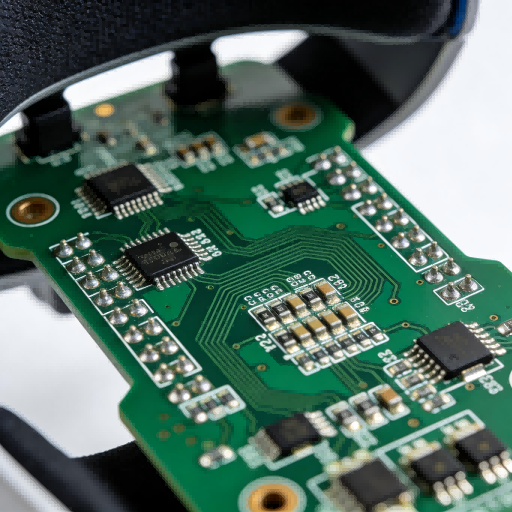
 Hot News


 沪公网安备31011702889749号

