


 Global










Did you know? In vehicle location tracking systems, electronic design faces two core challenges:
First, the system must maintain critical functions and enable uninterrupted tracking even after the vehicle's main power is turned off.
Second, the power supply for the GSM module, which is the core of communication, must be strictly stabilized within a wide input voltage range of 4.2V to 36V to cope with complex transient interference and surge impacts on the automotive power line. These challenges directly point to the electromagnetic compatibility (EMC) design of the power path. Any abnormal voltage fluctuation may lead to communication interruption and tracker failure.
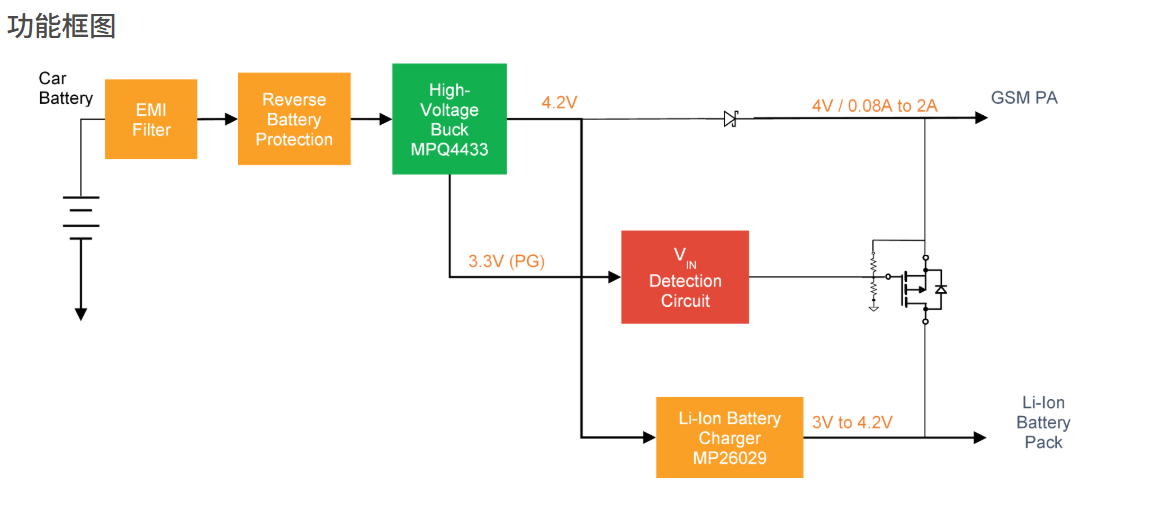
Solution One: Wide-Voltage Input and Reverse Polarity Protection - The First Line of Defense for the Power Path
Electronic trackers are typically directly connected to the vehicle's 12V or 24V battery, and the risks faced at the power input far exceed those in consumer electronics. Conditions such as cold cranking and load dump can generate negative or high-voltage pulses far exceeding the battery voltage by several times. Therefore, a DC-DC buck converter with wide-voltage input capability (e.g., 4.2V-36V) is fundamental, but this alone is insufficient. It is essential to integrate reverse polarity protection and surge suppression functions at the power input to prevent permanent damage to the backend circuits caused by reversed battery connection or high-energy pulses.
For surge protection on 12V/24V vehicle power lines, Yint Electronics provides mature protection solutions. For example, for 12V systems, it is recommended to use the CMZ1211-501T common-mode inductor paired with SM8K24CA or 5.0SMDJ24CA TVS diodes. For 24V systems, the PBZ2012E600Z0T inductor can be selected in combination with TVS devices such as SM8K33CA and SM8K36CA. This solution can effectively clamp high-voltage surges on the power line, providing a clean and safe input environment for the subsequent DC-DC converter.
Solution Two: "Clean" Power Supply for the GSM Module - Second-Order Filtering and Precise Protection
The GSM module is the "throat" for the tracker's communication with the outside world and is extremely sensitive to power supply noise. Switching noise (350kHz to 2.5MHz) generated by the DC-DC converter, if coupled into the GSM module's power supply, will severely interfere with its RF performance, leading to reduced signal sensitivity or even communication failure. Employing a second-order EMI filter is an effective means to suppress such conducted noise. It provides higher out-of-band attenuation, ensuring that the power ripple supplied to the GSM module meets the requirements.
Simultaneously, the antenna interface of the GSM module is a high-risk path for electrostatic discharge (ESD) and lightning-induced surge intrusion. It is imperative to deploy protection devices with low capacitance and high surge capability at the antenna feed line. Yint Electronics' ESDLC5V0D8B is a protection device specifically designed for RF ports such as GPS/GSM. Its ultra-low capacitance value minimizes the impact on RF signal integrity while providing robust ESD and surge protection capability, ensuring the stability of the communication link in harsh electromagnetic environments.
Solution Three: Building a Complete Protection Network for the E-Tracker - Signal and Data Interfaces
In addition to the main power and communication channels, other interfaces on the tracker, such as the CAN bus (used to connect to the vehicle network to obtain vehicle status) and USB (used for diagnostics or upgrades), also require targeted protection. For example, for the CAN bus, a common-mode inductor like the CML4532A-510T can be selected to suppress bus interference, paired with ESDLC3V3D3B or ESD24VAPB for transient voltage protection. For USB ports, a combination of devices such as ESDSRVLC05-4, ESDLC5V0D3B, and ESDLC5V0D8B is recommended to implement ESD protection for the data lines.
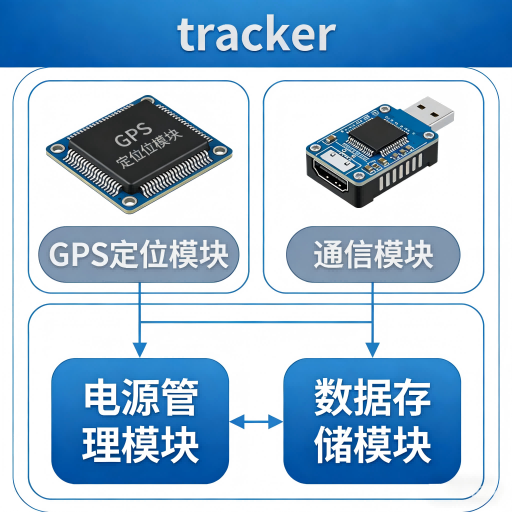
Final Action Recommendations:
When designing an electronic tracker, electromagnetic compatibility (EMC) protection should be regarded as equally important as functional design. It is recommended that during the initial PCB layout stage for power input, DC-DC output, RF ports, and all external interfaces, dedicated positions be reserved for corresponding Yinte Electronic protection devices. Priority should be given to integrated, small-footprint solutions (such as DFN1006-3L) to establish a comprehensive protection network from power to signal within limited space, ensuring the tracker's reliable operation under all-weather and full-operating conditions.
 Hot News


 沪公网安备31011702889749号

