


 Global









On the AI-driven cybersecurity battlefield, intelligent security management servers (e.g., Check Point Quantum Smart-1, Palo Alto PA Series, Cisco SecureX platform) are becoming the "intelligent brain" of network defense. These devices integrate high-performance AI inference chips, high-speed network interfaces, and complex power architectures. Their stable operation is not only related to algorithmic efficiency but also directly concerns the entire network's security perimeter. However, the intense current transients caused by high-density computing, the conducted and radiated noise introduced by high-speed data interfaces, and the surge impacts faced by complex power supply networks constitute severe Electromagnetic Compatibility (EMC) challenges. A server crash caused by transient interference coupled from the power supply, or a data packet error triggered by interface electrostatic discharge (ESD), could be exploited by attackers to create security vulnerabilities. Therefore, constructing a comprehensive circuit protection scheme from the external power entry point to every internal high-speed signal link is key to ensuring the hardware foundation of AI security servers is unbreakable.
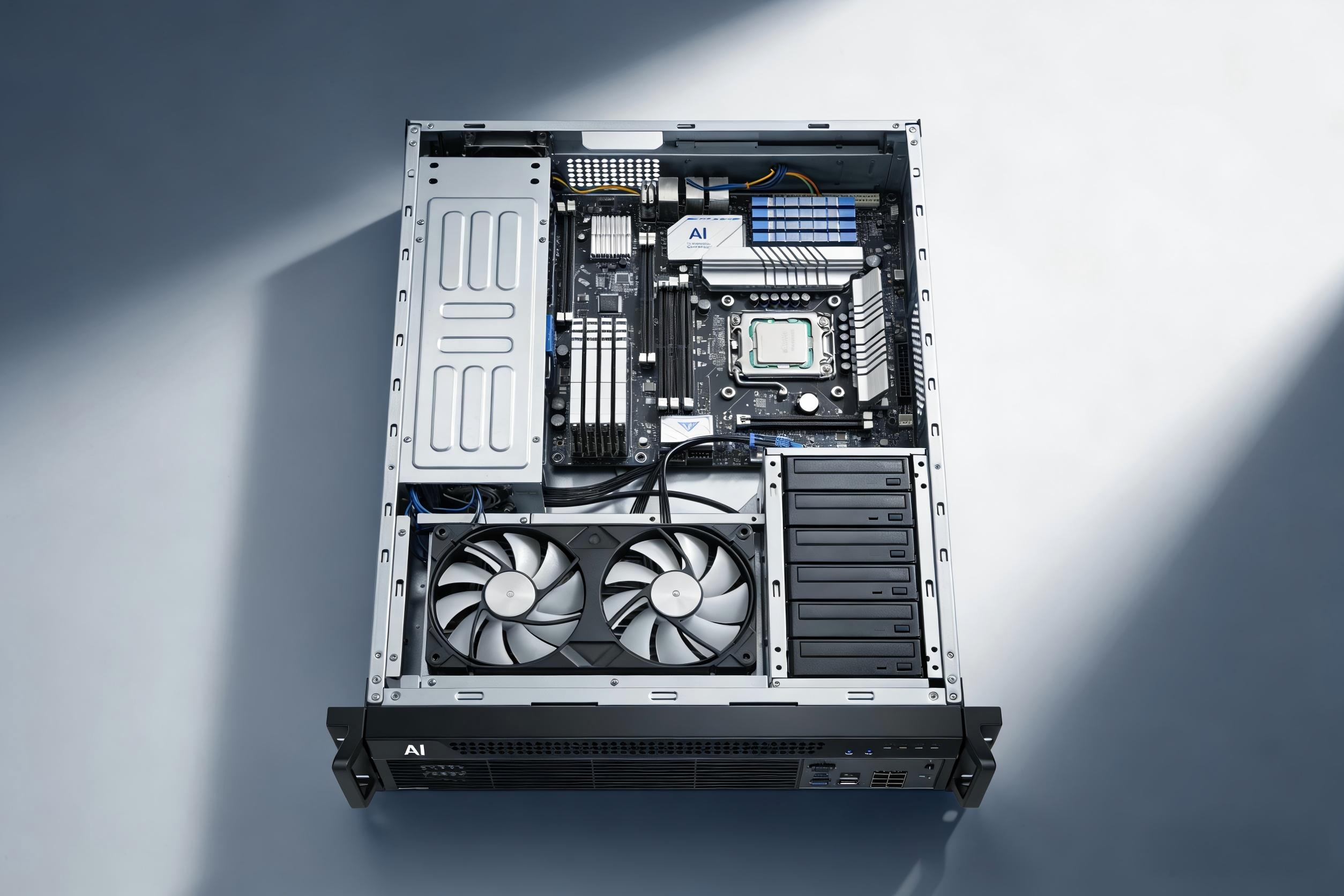
Consideration One: Dual Protection for High-Speed Network Ports, the First Line of Defense for Signal Integrity and Physical Security
The network service interfaces of intelligent security management servers are the core of their data throughput and threat perception. Whether it's the 10G RJ45 electrical port for routine management or the 100G QSFP-DD optical port for backbone traffic aggregation, their high-speed differential signals are extremely sensitive to electromagnetic interference. Simultaneously, these exposed interfaces are the primary targets for lightning surge and human body electrostatic discharge attacks.
RJ45 Electrical Port Protection: Gigabit and 10-Gigabit Ethernet ports require EMI filters to have excellent insertion loss performance across a wide frequency band (especially in the high-frequency range) to suppress the chip's own noise from radiating outward, while maintaining extremely low differential insertion loss to avoid affecting signal integrity. For this scenario, the CMZ2012A-900T common mode choke is recommended. Its high impedance characteristic of 900Ω@100MHz can effectively filter common-mode noise, and its compact 2012 package and excellent differential signal transmission characteristics make it very suitable for high-density server board design.
On the EMS protection side, it is necessary to address potential lightning-induced surges and frequent plug/unplug ESD events. Therefore, each PHY chip must be equipped with reliable protection devices. It is recommended to pair it with Yinte's ESDLC3V3D3B TVS Diode Array. Its 3.3V operating voltage perfectly matches the Ethernet PHY chip voltage, and its extremely low parasitic capacitance (typical value)...
High-Speed Optical Module and Combo Port Protection: The electrical interfaces of optical modules like SFP+, QSFP28 (e.g., I2C management bus, modulator driver power supply) are equally fragile. Their low-voltage, high-speed characteristics demand that protection devices must have extremely low parasitic capacitance. For ESD protection on these interfaces, Yinte's ESDULC5V0D8B or ESDLLC5V0D8BH are ideal choices. They provide a typical capacitance value below 0.5pF, ensuring minimal impact on the eye diagram of high-speed signals, while offering industry-leading IEC 61000-4-2 Level 4 protection.

Consideration Two: The "Invisible Armor" for Management and Control Interfaces, Ensuring Out-of-Band Management Never Fails
The power system of an AI security server is complex, with multiple layers from external AC/DC input to internal multi-channel voltage conversion. Each stage can introduce or conduct interference. The stability of the power network directly determines whether the computing unit can sustain full-load AI threat analysis.
This is the primary path for lightning surge and grid fluctuation intrusion. At the input of the power supply unit (PSU), coarse protection must be deployed. It is recommended to use a Gas Discharge Tube (GDT) such as the 2R600L-8×6 or 14D511K as the first-stage discharge path to shunt most of the lightning energy to ground. The subsequent stage requires pairing with a Metal Oxide Varistor (MOV) or a TVS diode with high surge current capability (e.g., the 5.0SMDJ400CA, 5.0SMDJ550CA series) for precise clamping. For high-power models with 380V three-phase input, it is necessary to select GDTs of corresponding voltage ratings like the 14D561K and combine them with TVS diodes such as the 5.0SMDJ75CA to form a coordinated protection circuit.
Data center DC power supply systems also face surges caused by load switching. For -48V communication DC, the SMCJ58CA TVS can be used for protection. For 240V/400V HVDC, a combination scheme using GDTs like the 14D151K or 20D151K with high-voltage TVS diodes is required to ensure stable power input in harsh data center environments.
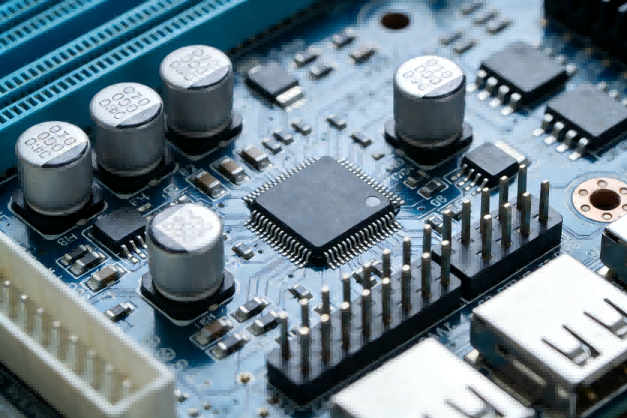
3.2 Internal DC Bus (+12V/+5V/+3.3V)
This is the critical power delivery link for the CPU, GPU, and memory, characterized by high current and high di/dt, making it prone to generating noise and being susceptible to interference. At the input and output of DC-DC converters, in addition to using MLCCs for filtering, the use of ferrite beads to suppress high-frequency noise should be considered. For example, on the high-current +12V path, the CMZ7060A-701T high-current ferrite bead can be selected. Its high saturation current characteristic ensures that the inductance value does not degrade under heavy loads, effectively suppressing power supply noise. Simultaneously, equipping these critical voltage rails with precision voltage protection TVS diodes, such as ESD3V3D3B (for 3.3V) and ESD5V0D3B (for 5V), can protect against voltage transients caused by hot-swapping or internal faults, safeguarding expensive AI accelerator cards and processors.
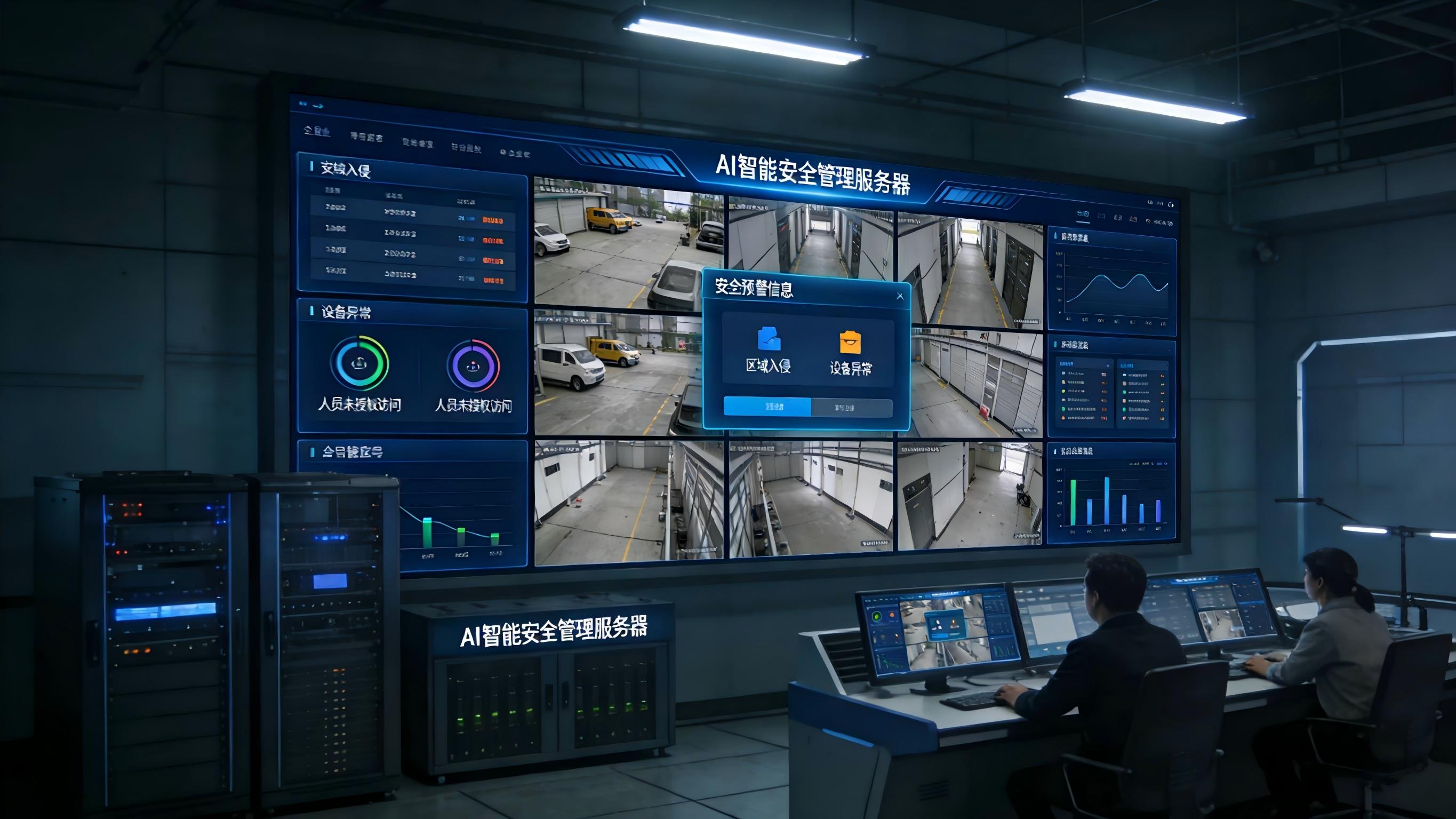
Designing protection solutions for high-end AI security platforms, such as the Check Point Quantum Smart-1 or Palo Alto PA-7000 series, should not be a simple stacking of components but requires system-level architectural thinking.
4.1 Hierarchical Protection and Energy Coordination
At the power entry point, adopt a multi-stage collaborative design of "GDT (energy discharge) + MOV/TVS (clamping)" to ensure massive surge energy is absorbed step by step, with the final residual voltage reaching the chip end being lower than its withstand value. Signal ports should follow the same principle, using ferrite beads or resistors for isolation, followed by TVS diodes for terminal clamping.
4.2 Layout and Grounding are Key
The grounding paths for all protection components (especially GDTs and TVS diodes) must be as short and thick as possible to reduce parasitic inductance, ensuring transient currents can be quickly discharged to the ground plane. Common-mode chokes should be placed as close as possible to the interface connector, and TVS diodes need to be placed close to the pins of the protected chip.
4.3 Component Selection Matching and Certification
Selected components must comply with server industry safety and reliability standards. The automotive-grade AEC-Q200 certified components provided by Yint Electronics (such as some CML/CMZ series ferrite beads and TVS diodes), with their high reliability and long lifespan, are fully suitable for 7x24 continuous operation server environments. For example: CMZ1211-501T is a model explicitly possessing automotive-grade certification, while models like CMZ2012A-900T and CMZ7060A-701T also offer equivalent high reliability for harsh environments. For products needing to meet safety standards like IEC/UL 60950-1 and GB 4943.1, the provided SMBJ, SMCJ, and 5.0SMDJ series TVS diodes can help equipment pass stringent lightning surge and surge tests.
When designing the hardware for next-generation AI intelligent security management servers, it is recommended to plan the EMI+EMS protection network as a "standard cell" during the schematic stage. Reserve footprint locations for the CMZ2012A-900T and ESDLC3V3D3B or ESD0524P for high-speed network interfaces; reserve space for the 14D511K GDT and 5.0SMDJ series TVS diodes at the power entry point; for critical chip power supplies, include TVS diodes like ESD3V3D3B in the essential BOM. By collaborating with the Yint Electronics technical team to obtain customized protection solution simulation and testing support tailored to specific server architectures, the hardware security foundation can be solidified from the source, enabling the AI security engine to operate stably, reliably, and at full speed in complex electromagnetic environments.
 Hot News


 沪公网安备31011702889749号

