


 Global









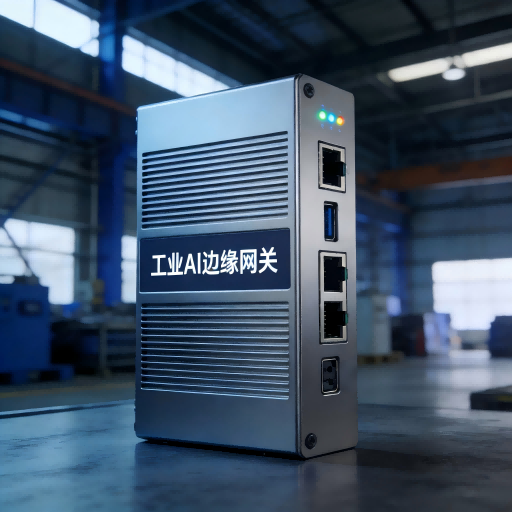
At the neural endpoints of the Industrial Internet of Things (IIoT), edge computing gateways are playing an increasingly critical role. They are not only hubs for data aggregation and processing but also the first line of defense against complex and harsh industrial field environments. From high-temperature, high-humidity workshops to substations with complex electromagnetic environments, from frequently vibrating construction machinery to outdoor facilities with significant day-night temperature variations, the stability of an edge computing gateway directly determines the reliability of the entire IoT system. Among these numerous challenges, Electromagnetic Compatibility (EMC) issues, particularly Electromagnetic Interference (EMI) and Electromagnetic Susceptibility (EMS) at interfaces, are often the invisible killers leading to "non-combat attrition" of equipment. A well-designed hardware architecture will see its stability significantly compromised if there are shortcomings in interface protection.
Reflection One: The "City Gate" of Interfaces – Why EMC Protection is Paramount in Gateway Design
The hardware value of an edge computing gateway is largely defined by its rich array of interfaces. These interfaces are the "city gates" for data ingress and egress, yet they are also the most vulnerable points susceptible to external electromagnetic "attacks." The electromagnetic environment of industrial sites can be described as a "battlefield": the start-stop of large motors, harmonics from frequency converters, the switching of relays, and even distant lightning strikes can generate complex electromagnetic stresses ranging from low-frequency conducted interference to high-frequency radiated interference, and from electrostatic discharge to surges of several kilovolts.
Taking a typical industrial edge gateway as an example, the EMC threats its interfaces face are multidimensional:
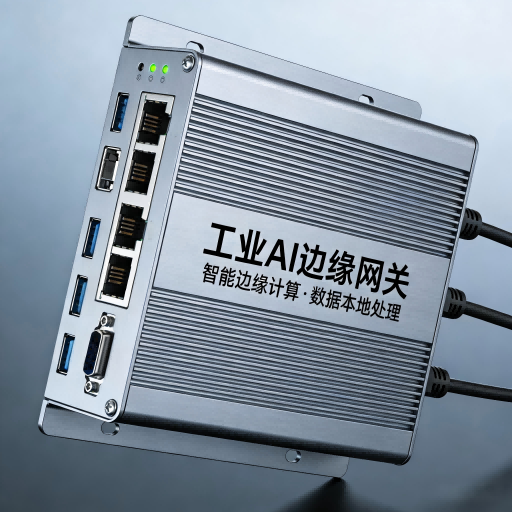
Network Communication Interfaces (Ethernet, WiFi, 4G/5G): Ethernet ports with long-distance cabling are highly susceptible to coupling common-mode interference and surges. Cellular and WiFi antennas are high-risk entry points for lightning-induced surges and Electrostatic Discharge (ESD).
Industrial Buses and Serial Ports (RS-485, CAN, RS-232): These interfaces typically require long-distance connections to field devices. Common-mode surges and ESD on differential line pairs are primary threats. Simultaneously, the EMI radiation from the bus signals themselves needs to be suppressed to meet standard requirements.
General-Purpose I/O and Power Interfaces: Digital I/O (DI/DO) and Analog I/O (AI/AO) lines directly connect to sensors and actuators, where switching noise, back-EMF from inductive loads, and interference introduced by ground potential differences are层出不穷. Wide-input DC power ports (e.g., 9-36VDC) are the main channels for the intrusion of lightning surge energy and power grid fluctuations.
Therefore, EMC design for edge computing gateways must never be an "after-the-fact remedy" but must be "synchronous design." Its core lies in equipping every "city gate" with professional "guards" and "filters"—that is, a complete set of EMS (protection against external interference) and EMI (suppression of self-generated interference) protection solutions.

Reflection Two: Building a Comprehensive Protection System – From the Network Core to the Industrial Edge
Based on the typical hardware composition of an edge computing gateway, we can construct a layered, all-interface EMC protection architecture for it. Leveraging profound technical expertise in circuit protection, Yinte Electronics provides a complete set of market-validated EMI+EMS solutions for each category of interface.
First Line of Defense: Radio-Frequency Level Protection for Network and Wireless Communication Interfaces
Network interfaces are the data aorta of the gateway. Their protection must balance high-speed signal integrity with extremely high immunity.
For Fast Ethernet and Gigabit Ethernet interfaces, suppressing common-mode noise on signal lines is critical. It is recommended to use Yint Electronics' CMZ2012A-900T common mode choke. Its high impedance of 900Ω @ 100MHz effectively filters common-mode interference on differential pairs, ensuring signal integrity, while its excellent symmetry has minimal impact on the insertion loss of differential signals.
On the EMS protection side, it is essential to address ESD and surge from network cables. For Fast Ethernet ports, the ESDLC3V3D3B is an ideal choice; its low clamping voltage and 3.3V operating voltage perfectly match PHY chip requirements. For scenarios requiring higher protection levels, such as ports supporting PoE power delivery which must withstand more severe lightning surge tests, a combined approach is recommended. Use a Gas Discharge Tube (GDT) like the 14D820K for primary energy diversion, paired with an SMCJ58CA TVS diode for precise clamping. Simultaneously, configure the ESDLC5V0D3B for data lines, forming a graded protection scheme that easily meets stringent standards like IEC 61000-4-5 Level 4.
Antenna interfaces, exposed to the external environment, are direct targets for ESD and lightning-induced surges. For antenna ports such as GPS, 4G, and 5G, it is recommended to use Yint Electronics' NRESDTLC5V0D8B TVS diode array, specifically designed for RF lines. Its typical capacitance is as low as 0.5pF, which hardly affects RF signal transmission performance, while providing up to 30kV contact discharge ESD protection (IEC 61000-4-2). It is a powerful tool for guarding the "first window" of wireless communication.
Industrial buses are the lifelines connecting the field control layer. The focus of their protection lies in resisting common-mode interference and ensuring communication robustness in harsh environments.
The CAN bus is widely used in automotive and industrial control, where its anti-interference capability is directly related to system safety. Specialized protection schemes are required for the CAN bus's specific dominant/recessive voltage levels. For EMI filtering, the CML4532A-510T or CML3225A-101T common mode chokes can effectively suppress high-frequency common-mode noise on the bus, improving signal quality.
For EMS protection, the ESDLC3V3D3B can provide precise ESD protection for standard CAN buses. For CAN nodes operating at higher voltages or requiring protection against surges between the power line and ground (e.g., in construction machinery, new energy vehicles), the ESD24VAPB or the ESDCANFD24VAPB, designed specifically for CAN FD, are superior choices. They integrate bidirectional TVS diodes, providing comprehensive protection for CAN-H and CAN-L against power and ground, with rapid clamping to ensure the bus controller remains safe during surge events.
Even with isolation design, the line side of interfaces like RS-485 still requires protection. For RS-485, it is recommended to use the CMZ2012A-900T common mode choke to suppress noise. EMS protection needs to handle ±15kV ESD and lightning-induced surges. Integrated RS-485 protection chips like the ESDSM712 can be used, or a combination scheme: use an SMBJ6.5CA TVS diode to handle medium-energy line-to-ground surges, and then pair it with a three-terminal gas discharge tube like the 3R090L-6X8 to divert higher-energy lightning surges, building a robust defense line.
I/O and power ports come in many varieties; protection must be tailored based on specific electrical parameters.
These interfaces directly connect sensors and actuators, operating in complex conditions. For general 5V or 3.3V level-sensitive digital input ports, ESD5V0D3B or ESD3V3D3B are standard ESD protection choices; their ultra-low dynamic resistance ensures a sufficiently low clamping voltage. For digital output ports driving inductive loads such as relays, besides adding a freewheeling diode at the load side, paralleling TVS diodes like SMBJ24CA at the gateway side port can effectively absorb the back EMF voltage generated during turn-off, protecting the internal drive circuit.
2. Wide-Voltage DC Power Input (e.g.
12/24/48VDC) Protection:
The power port is the primary channel for energy intrusion, requiring graded protection. For common 24V industrial power inputs, a high-current common mode choke like CMZ7060A-701T can be placed at the entry point first to suppress conducted noise on the power lines. EMS protection requires a system from coarse to fine:
Primary Protection (Diverting High Current): Use varistors such as 14D151K (for 110VDC) or gas discharge tubes.
Secondary Protection (Clamping and Voltage Limiting): This is the core stage. It is recommended to use TVS diodes with strong surge current capability, such as SMDJ24CA or 5.0SMDJ36CA, to rapidly clamp surge voltages within a safe range.
Fine Protection (Handling Residual Voltage): Near the input of the DC-DC converter, another SMBJ28CA can be paralleled to further smooth voltage spikes. For 48V systems (e.g., PoE switches, light electric vehicle BMS), devices with higher clamping voltages like 5.0SMDJ75CA or 14D101K are required.
Consideration Three: Selection and Layout: Translating Protection Schemes into Reliable Designs
With suitable components, maximizing their effectiveness depends on selection details and PCB layout.
Key Selection Considerations:
1. Voltage Matching
The TVS breakdown voltage (VBR) and clamping voltage (VC) must be higher than the circuit's maximum operating voltage and lower than the protected chip's absolute maximum rating, with sufficient margin.
2. Power and Energy
Select TVS diodes or varistors with sufficient peak pulse power (e.g., 600W, 1500W, 5000W) based on the potential surge test levels (e.g., IEC 61000-4-5 1.2/50μs-8/20μs waveform).
3. Signal Integrity
For high-speed interfaces (USB 3.0, HDMI, Gigabit Ethernet), low-capacitance protection devices must be selected, such as CMZ2012A-900T (CML) and NRESDTLC5V0D8B (TVS array), whose capacitance is typically at the 0.5pF level.
4. Package and Reliability
For industrial applications, prioritize components with automotive-grade or industrial-grade certifications. Many products from Yinte Electronics, such as the ESD24VAPB and SMDJ series, comply with standards like AEC-Q101 and are suitable for a wide temperature range from -40°C to 125°C.
PCB Layout Golden Rules:
Place protection devices close to the interface: All TVS, GDT, and CML components must be placed as close as possible to the entry point of the connector pins onto the PCB, minimizing the protection loop area.
Keep discharge paths short and thick: The path from the TVS ground pin to the system reference ground must be short and wide, using via arrays to connect directly to a solid ground plane, ensuring surge current can be discharged instantly and smoothly.
Hierarchical layout for power protection: Place primary protection devices (GDT/varistor) near the power socket and secondary TVS diodes near the DC-DC input capacitors, forming a clear, graded energy discharge path.
Ground plane partitioning and bridging: For isolated interfaces, the interface ground (PGND) and system digital ground (DGND) should be connected at a single point. Typically, this connection point is the grounding point of the protection device (e.g., TVS) or the grounding pin of the isolation module.
Consideration Four: Actionable Advice: A Reliability Investment Starting from the Initial Design Phase
For hardware engineers currently developing or planning to develop industrial edge computing gateways, EMC protection is not a cost item but a reliability investment crucial to product reputation and market success. It is recommended that during the project schematic design phase, referring to the above interface classification, the corresponding EMI+EMS solutions from Yint Electronics be incorporated into the component library as the default selection. For example, when drawing the Gigabit Ethernet port circuit, directly place the footprints for CMZ2012A-900T and ESDLC3V3D3B. When planning the 24V power input, reserve positions for SMDJ24CA and CMZ7060A-701T.
By adopting this "Design for Protection" philosophy, not only can the cycle time and cost of subsequent EMC testing and rectification be significantly reduced, but it can also fundamentally enhance the product's service capability and brand credibility in various harsh industrial environments. Yint Electronics' comprehensive protection product portfolio and profound technical support can help build a comprehensive electromagnetic fortress for your edge computing gateway, spanning from chip to system and from low frequency to radio frequency. To obtain detailed datasheets, application notes, or sample support for the recommended models mentioned above, please contact our technical team to jointly build the next generation of indestructible industrial IoT cornerstones.

 Hot News


 沪公网安备31011702889749号

