


 Global









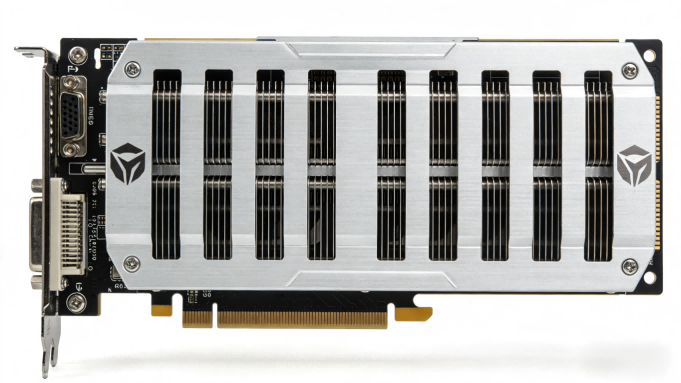
In the data center server room, GPU computing cards are driving the limits of AI training, scientific computing, and graphics rendering. However, when hundreds of amperes of current switch at nanosecond speeds, and PCIe 5.0 signals race at 32 GT/s, an invisible challenge emerges—system-level Electromagnetic Compatibility (EMC) issues. This is not only about regulatory compliance but also directly determines the long-term stability and reliability of computing power output. A single PCIe link training failure triggered by Electrostatic Discharge (ESD) or power surge can interrupt a multi-million-dollar AI cluster training task, resulting in incalculable losses.
To build a robust protection system, it is first necessary to precisely locate the source of interference. The electromagnetic environment of modern high-performance GPU computing cards is exceptionally complex, with main interferences falling into three categories:
1. High-Frequency Radiation from the Core and Memory
Although the GPU core operating voltage is as low as 0.7V to 1.2V, its dynamic current can reach hundreds of amperes. Combined with the high-speed data exchange of GDDR6/6X/HBM memory at 1.2V to 1.5V, this constitutes a powerful broadband noise source. Its switching noise and harmonics can easily couple through the power plane and radiate through space, contaminating the entire system environment.
2. Conducted Noise from VRM and Power Delivery Networks
Whether it's the small amount of 12V supplied by the motherboard PCIe slot or the high-power 12V input from independent power connectors (such as 12V HPWR 16-pin or traditional PCIe 8-pin), it requires high-frequency DC-DC conversion through multi-phase Voltage Regulator Modules (VRM). The switching noise and ripple generated in this process are the primary causes of Conducted Emission (CE) exceeding limits at the power port and can interfere with sensitive analog and clock circuits through common-impedance coupling.
3. Transient and Common-Mode Interference on High-Speed Interfaces: The PCIe 4.0/5.0 x16 interface, serving as the data lifeline, operates at extremely high differential signal rates and is exceptionally sensitive to ESD and cable-coupled common-mode noise. Similarly, the NVLink interface used for multi-card interconnection and video output interfaces like HDMI 2.1 and DisplayPort 2.1 are critical paths for both external electromagnetic interference ingress and internal noise egress.
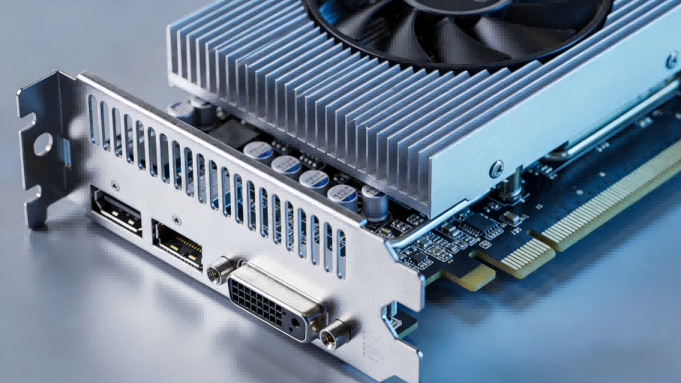
In actual R&D testing and field deployment, failures caused by EMC issues manifest in various forms:
Radiated Emission Exceeding Limits: In the frequency range from 30MHz to 6GHz, especially near the harmonic frequencies of the GPU core clock, insufficient shielding or improper filtering can easily lead to Radiated Emission (RE) test failures.
System-Level ESD Susceptibility: Static electricity introduced by maintenance personnel during hot-plugging of network cables or touching I/O interfaces can directly damage the transceivers of PCIe or display interfaces, causing the computing card to crash, reboot, or experience performance degradation.
Signal Integrity Degradation: Power supply noise coupling onto high-speed signal lines can worsen jitter and eye diagrams of PCIe signals, leading to link training failures and data packet loss, ultimately manifesting as unstable computing performance or training errors.
Interference Between Internal Modules: High-frequency noise generated by the GPU card may couple through power or space to interfere with other critical modules within the same server, such as network cards and storage controllers, causing systemic instability.
Addressing the EMC issues of GPU computing cards requires a systematic approach, deploying corresponding EMI suppression (Electromagnetic Interference suppression) and EMS protection (Electromagnetic Susceptibility protection) components for different noise paths and sensitive nodes.
The power port is the primary entry point for conducted noise and surge intrusion. An effective filtering and protection network must be deployed at the entry point for the 12V main power supply lines.
EMI Filtering: It is recommended to use YINT Electronics' CMZ7060A-701T common-mode inductor. It efficiently suppresses high-frequency common-mode noise on the power supply lines, preventing switching power supply noise from conducting outward and also blocking external noise intrusion. Its high saturation current characteristic fully meets the high-power demands of GPUs.
EMS Protection: To clamp potential surges and transient overvoltages that may couple into the power lines, TVS diodes must be used. For 12V lines, it is recommended to select SMCJ15CA or 5.0SMDJ15CA, providing surge protection capabilities of 2KV and 4KV levels, respectively. For more sensitive auxiliary power rails like 3.3V and 5V, it is recommended to use ultra-low capacitance ESD protection devices such as ESD3V3D3B and ESD5V0D3B, which provide electrostatic protection without compromising power quality.
Protection for high-speed differential interfaces like PCIe and NVLink must provide robust ESD protection while maintaining extremely low signal integrity loss.
PCIe Interface Protection: PCIe 4.0/5.0 interfaces have extremely stringent requirements for the parasitic capacitance of protection devices. The solution provided by YINT Electronics for this scenario is a combination of the CMZ2012A-900T common-mode filter and the ESDLC3V3D3B ESD protection device. The CMZ2012A-900T effectively filters common-mode noise on signal lines, improving immunity. The ESDLC3V3D3B has a typical capacitance as low as 0.5pF, and its ultra-low clamping voltage ensures rapid energy dissipation when subjected to ±30kV contact discharge, perfectly protecting the PHY chip with minimal impact on the eye diagram of high-speed signals.
Display Interface Protection: HDMI 2.1 and DisplayPort 2.1 interfaces also face challenges of high speed and high resolution. It is recommended to use ESDULC5V0D9B or ESDLLC5V0D8BH. These devices provide top-level ESD protection (IEC 61000-4-2 Level 4) while featuring extremely low dynamic resistance and capacitance, ensuring video signal transmission without attenuation or distortion.
Other interfaces that may exist on the GPU card, such as USB interfaces for debugging or management, also need to be incorporated into the protection system. For USB 2.0/3.0 interfaces, the recommended solution is CMZ2012A-900T (EMI filter) paired with ESDSRVLC05-4 or ESDLC5V0D8B (ESD protection array). This combination provides a complete solution from noise suppression to transient protection.
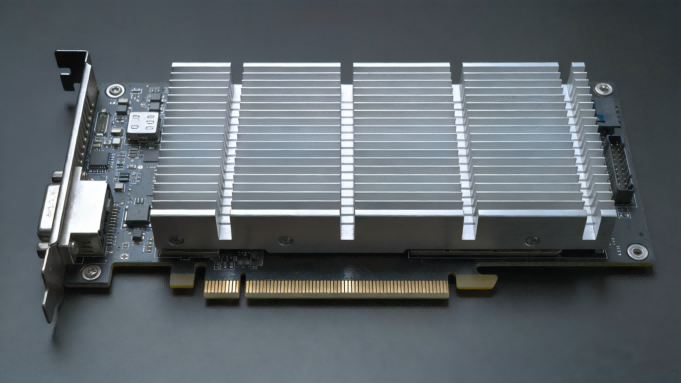
Excellent components require correct application to be effective. In high-density designs like GPU computing cards, PCB layout is crucial:
Power Filtering Components: Components like the CMZ7060A-701T and TVS diodes should be placed as close as possible to the power input connector, ensuring interference is handled at the entry point to prevent noise from contaminating the entire power plane.
High-Speed Interface Protection Devices: Devices like the ESDLC3V3D3B must be placed immediately adjacent to the signal pins of the PCIe connector. The protection traces should be short and thick to ensure minimum impedance in the discharge path. Their GND terminal should be connected to a clean digital ground and properly connected to the main ground plane through vias.
Selection Considerations: When finalizing the selection of TVS or ESD devices, in addition to focusing on breakdown voltage, clamping voltage, and power rating, it is essential to verify that their parasitic capacitance meets the signal rate requirements. For PCIe 5.0, the capacitance of protection devices is typically required to be below 0.3pF.
The electromagnetic compatibility design of GPU computing cards is a game of precision and robustness. It requires engineers not only to understand circuit principles but also to deeply understand the generation, coupling, and propagation mechanisms of noise in complex systems. By adopting this systematic solution from EMI filtering to EMS protection provided by YINT Electronics—from the CMZ7060A-701T and 5.0 SMDJ15CA at the power entry to the CMZ2012A-900T and ESDLC3V3D3B for the high-speed core—you can build an invisible electromagnetic barrier for your valuable computing core. It is recommended to incorporate these proven protection components into the design during the early schematic phase of the next-generation GPU computing card or AI acceleration module, reserving footprint space. This will be the most cost-effective investment to ensure the product passes EMC certification on the first attempt and operates stably in the demanding data center environment for the long term.
 Hot News


 沪公网安备31011702889749号

